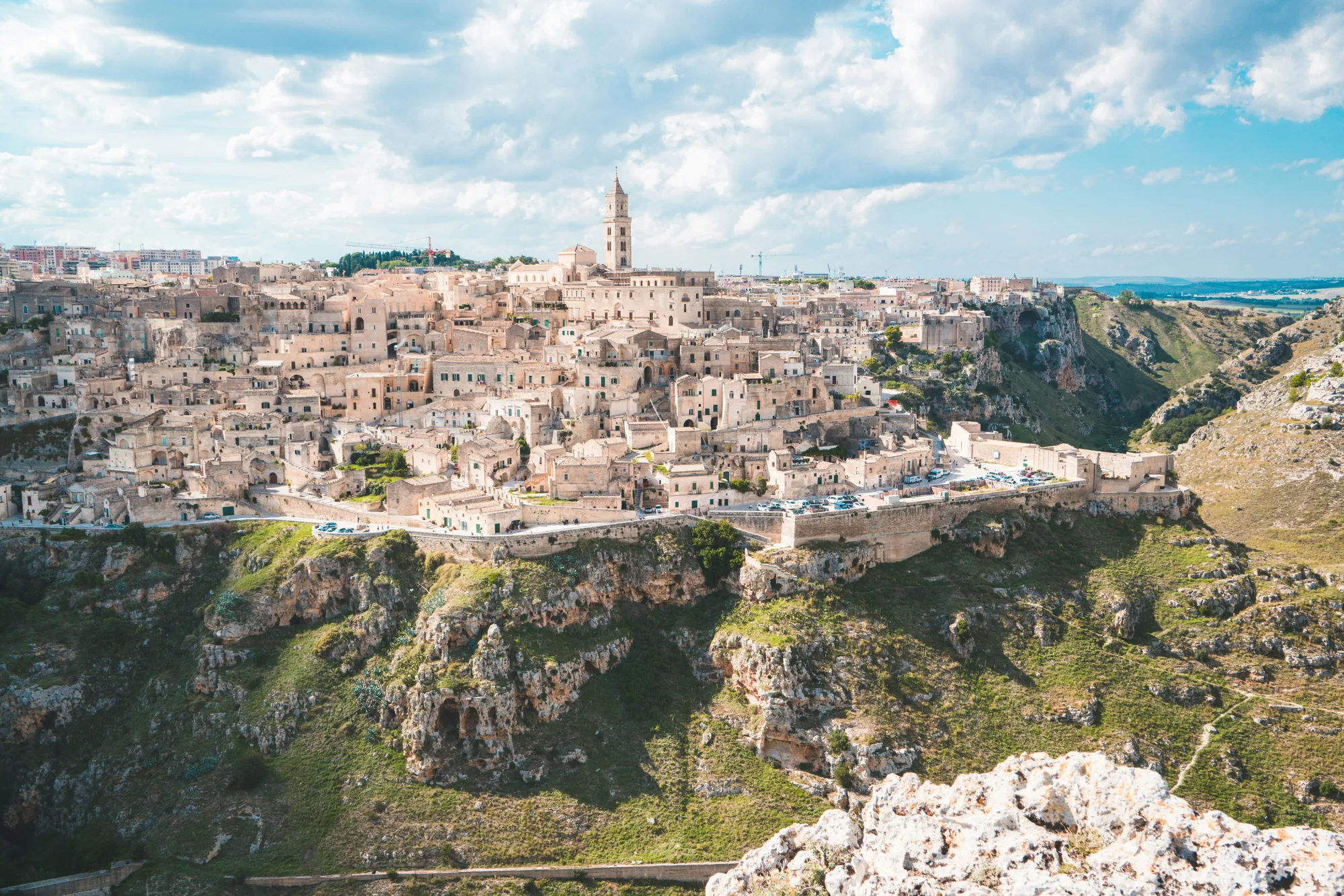
Matera
One of the oldest continuously inhabited cities on earth
The Sassi di Matera are carved into the ravine of the Gravina river — cave dwellings, rupestrian churches, and a skyline that belongs to no other city in Europe. Named a UNESCO World Heritage Site in 1993 and European Capital of Culture in 2019, Matera is where most visitors begin their encounter with Basilicata. The question this site asks is: where do you go after Matera?
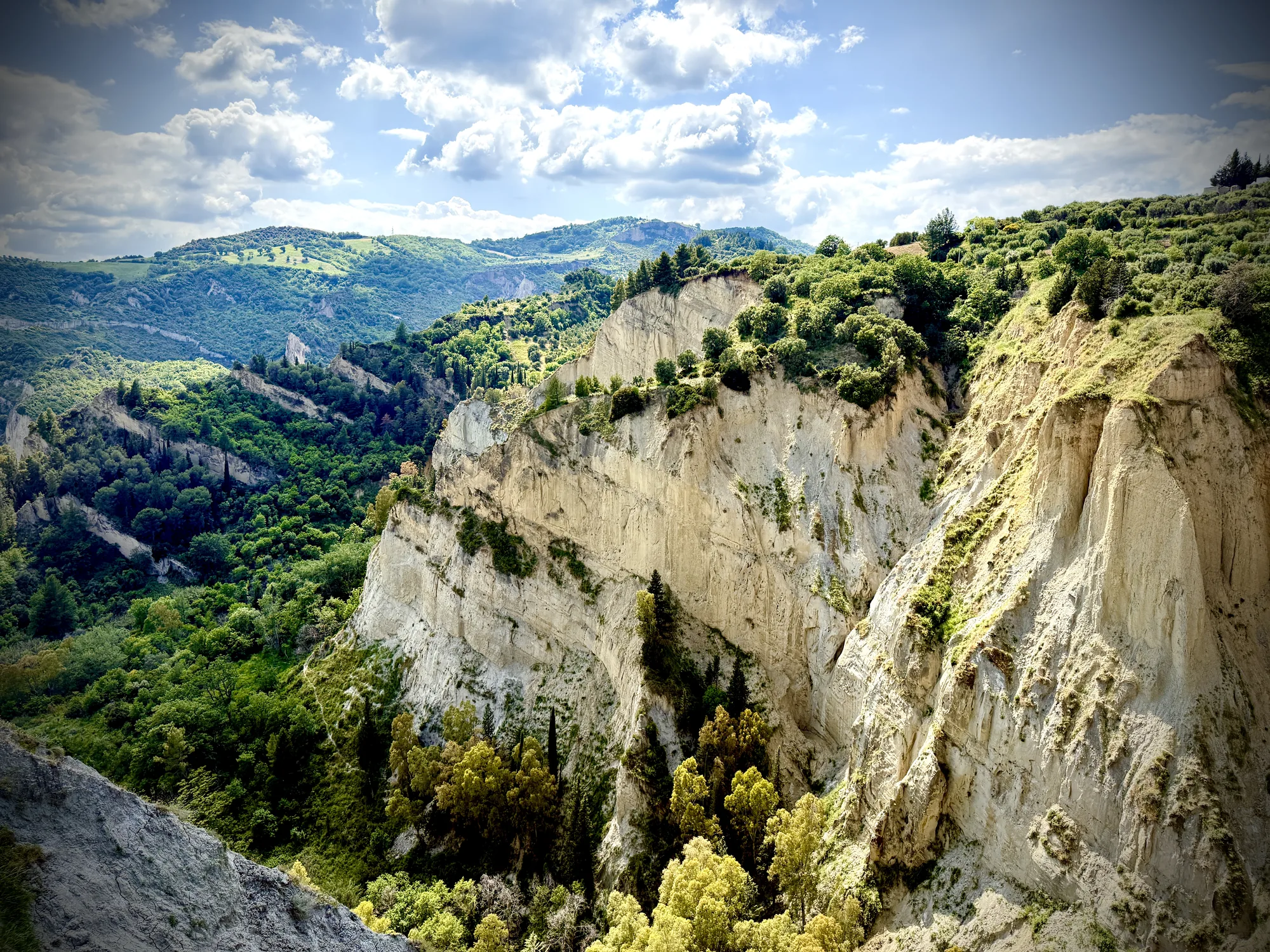
The Calanchi &
the Interior
Where the earth holds the weight of history
The clay ravines south of Aliano were shaped by centuries of patient erosion — bone-white ridges carved by water into forms that feel geological rather than geographical. This is the landscape Carlo Levi encountered in his exile and documented in one of the great works of Italian literature. It reveals itself slowly, to those willing to wait.
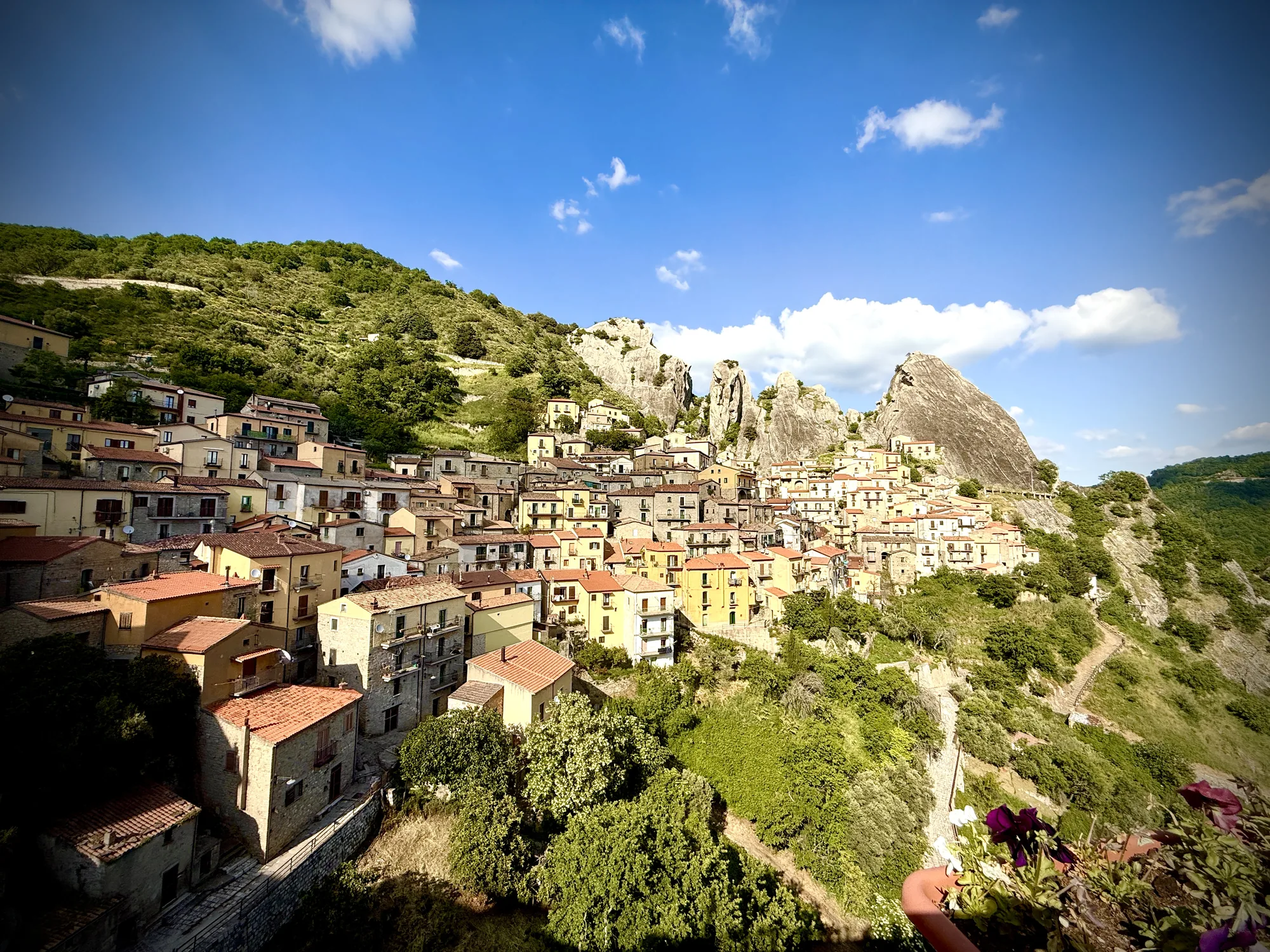
The Dolomiti
Lucane
Where the village and the rock are inseparable
The dramatic limestone peaks of the Dolomiti Lucane rise from the Basento valley in formations that dwarf the villages clinging to their flanks. Castelmezzano and Pietrapertosa face each other across a gorge, connected by the Volo dell'Angelo zipline. But it is the stillness of the villages themselves — the stone streets, the views, the absence of crowds — that makes this zone worth the journey.
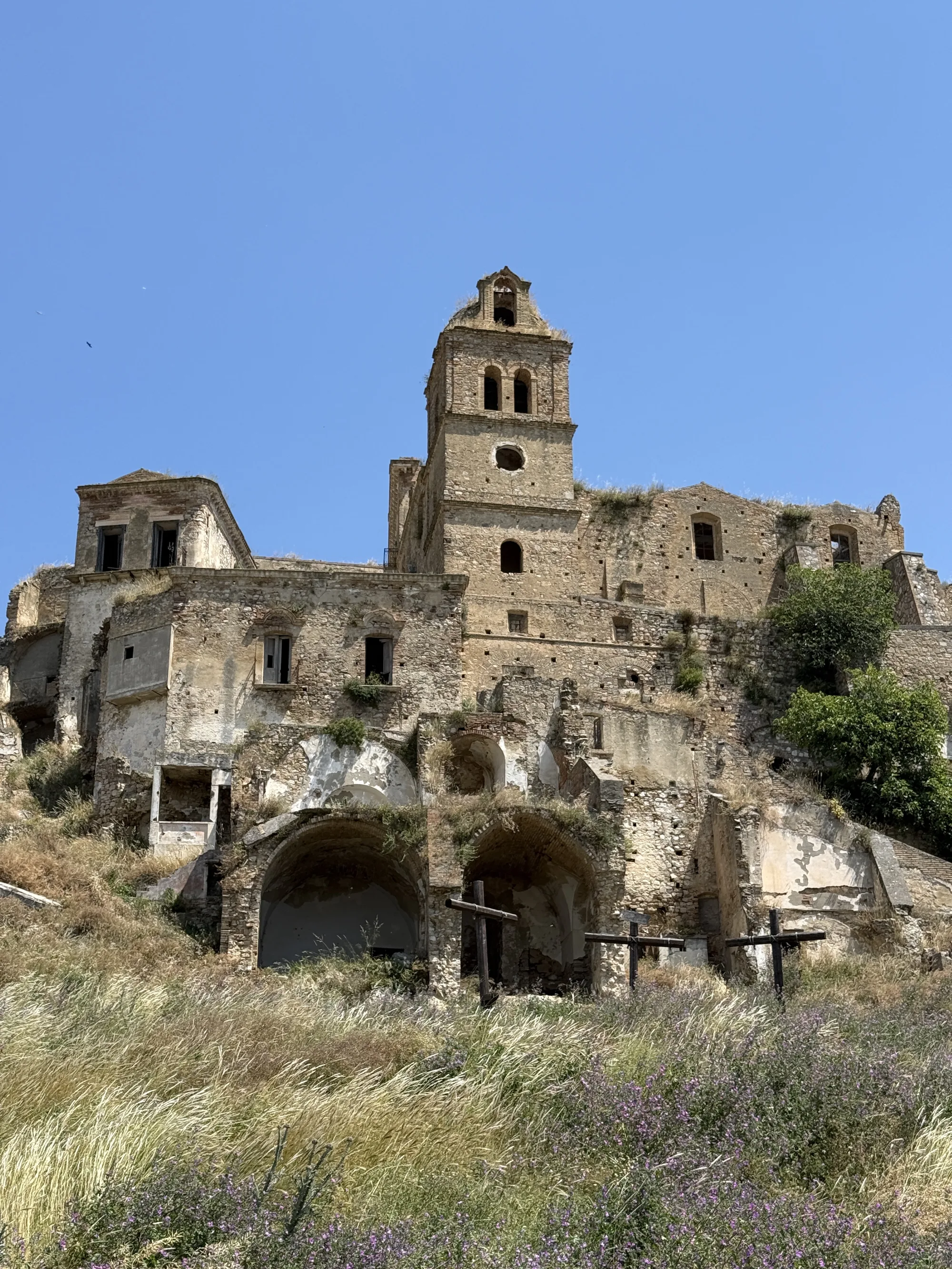
Craco &
the Ghost Towns
What remains when everyone leaves
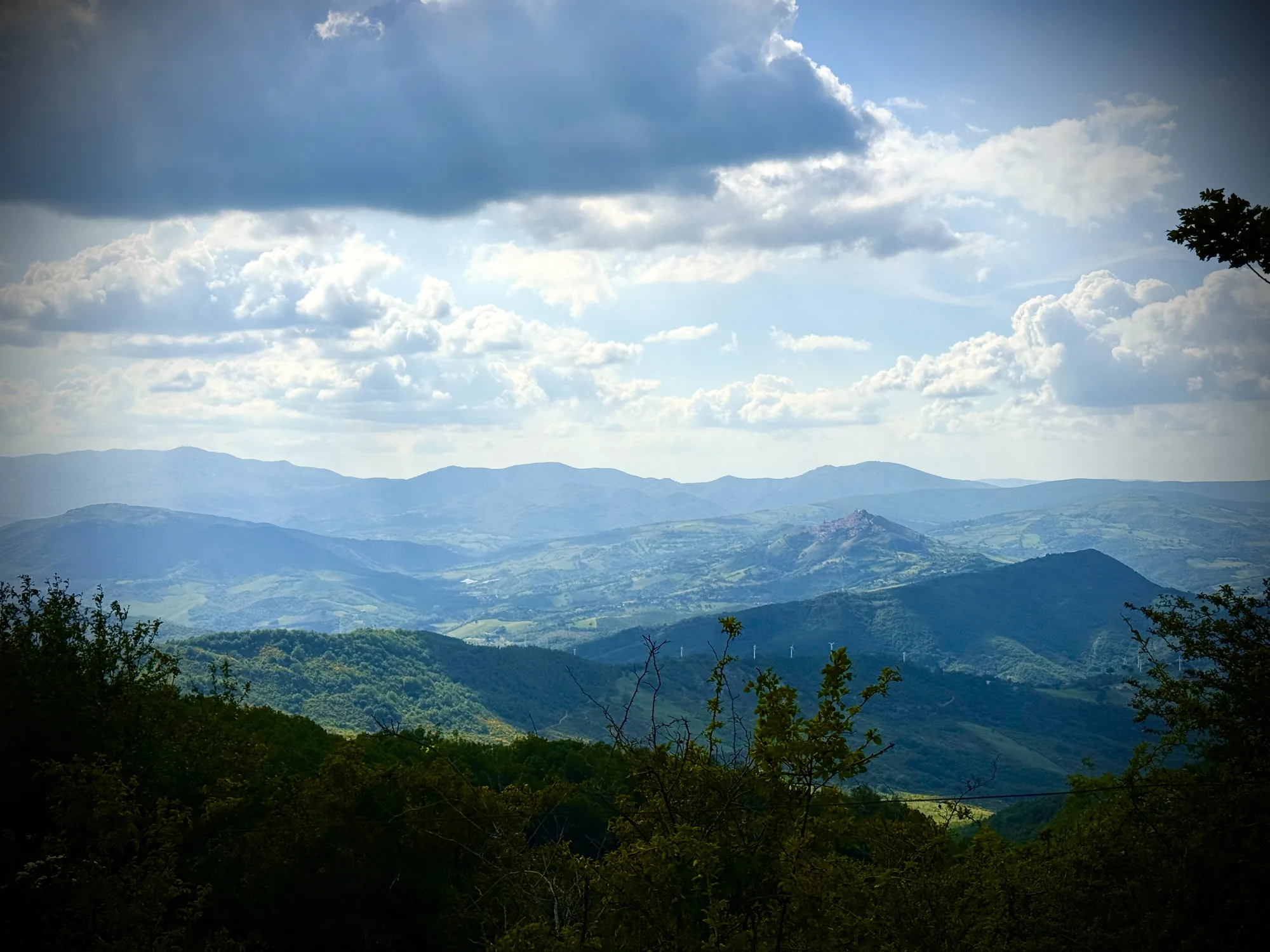
Craco was evacuated in 1963 following a landslide, its population relocated to the valley below. The medieval village was left intact — suspended in the slow act of returning to earth. A bush grows where the altar once stood. The roof of the church is open sky. Basilicata has more abandoned settlements than almost any region in Italy. Craco is their most eloquent monument.
Monte Vulture
The most historically layered zone in Basilicata
An extinct volcano in the northern reaches of the region, Monte Vulture's mineral-rich soils produce Aglianico del Vulture — one of Italy's most serious and underappreciated red wines. The surrounding area carries the marks of every civilization that passed through: the Greeks at Metaponto, the Romans at Venosa (birthplace of Horace), the Normans at Melfi. History here is not curated. It simply accumulates.
Il Pollino — Italy's Largest National Park
Italy's largest national park. Where the landscape asks nothing of you but attention.
At 192,565 hectares, the Pollino is the largest national park in Italy, straddling the Basilicata-Calabria border across the highest section of the southern Apennines. The Pino Loricato grows here in forms that are more sculpture than tree, some specimens over a thousand years old. Wolves move through valleys that have seen no significant human intervention for centuries. The Raganello gorge cuts 400 metres through limestone. The Albanian community of Civita, settled by refugees from the Ottoman conquest in the 15th century, still speaks a form of 15th-century Albanian and celebrates Byzantine Orthodox Easter in a language that modern Albanians can barely understand.
Val d'Agri — National Park & Oil Country
Europe's largest onshore oilfield. Italy's second national park in Basilicata. The same valley.
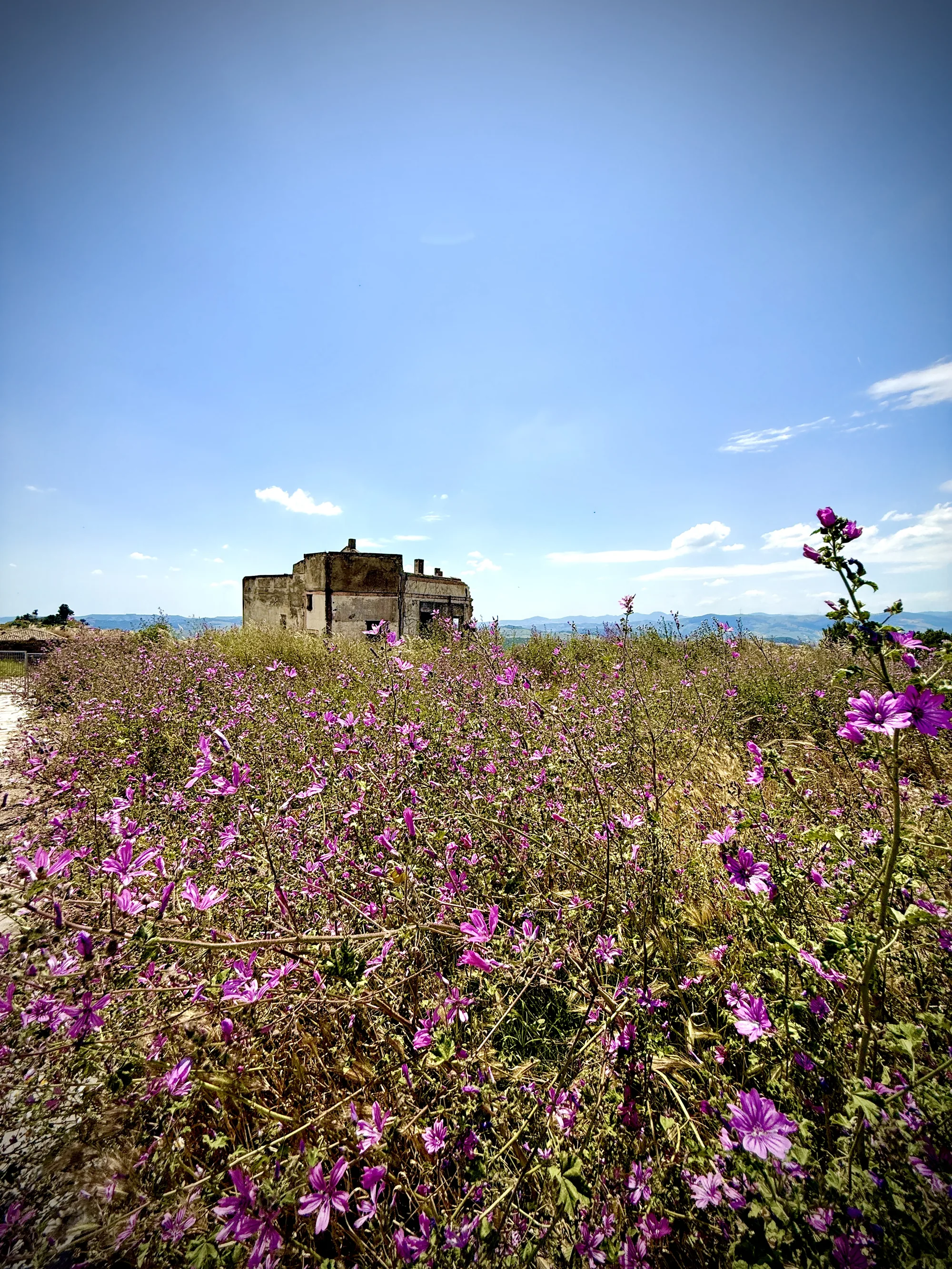
The Parco Nazionale dell'Appennino Lucano Val d'Agri Lagonegrese — established in 2007 — protects 68,000 hectares of the central Basilicatan interior: beech forests, high pastures, the intact riparian woodland of the Agri valley floor. It also sits above Europe's largest onshore oilfield. The Pertusillo reservoir supplies drinking water to two million people across three regions. The Madonna di Viggiano is carried in procession twice a year through the same landscape. Basilicata holds these contradictions without resolving them. The valley is worth understanding for exactly that reason.
Potenza
The south's most overlooked city
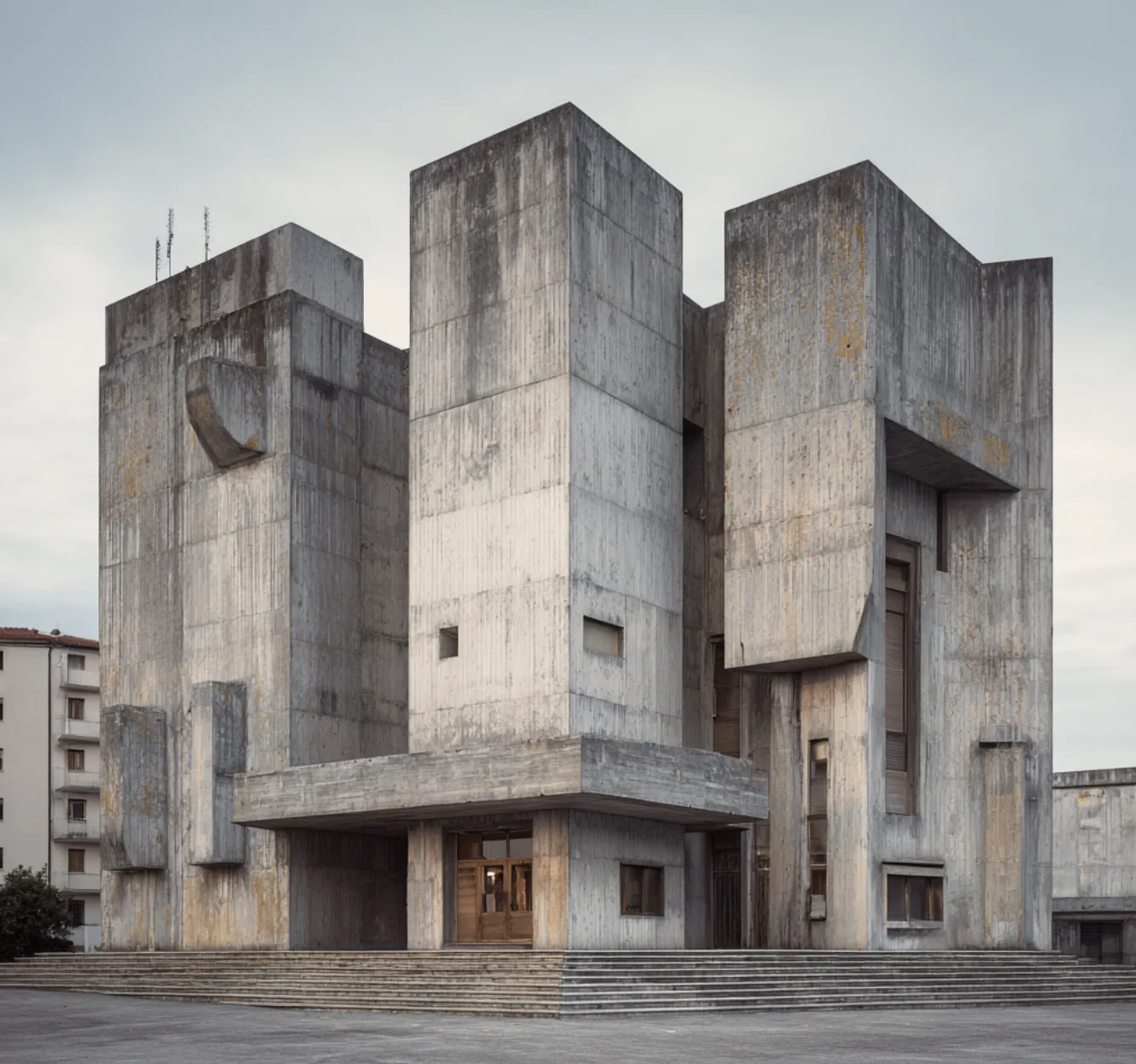
At over 800 metres, Potenza is one of the highest regional capitals in Italy — a city that rebuilt itself through the postwar decades with civic ambition and concrete. Its brutalist and rationalist architecture sits in uneasy, fascinating dialogue with the mountains surrounding it. Nobody writes about Potenza as a destination. That is precisely why it deserves attention. The south trying to build itself into modernity has a dignity all its own.
Maratea
The anti-Amalfi — dramatic, quiet, and largely undiscovered
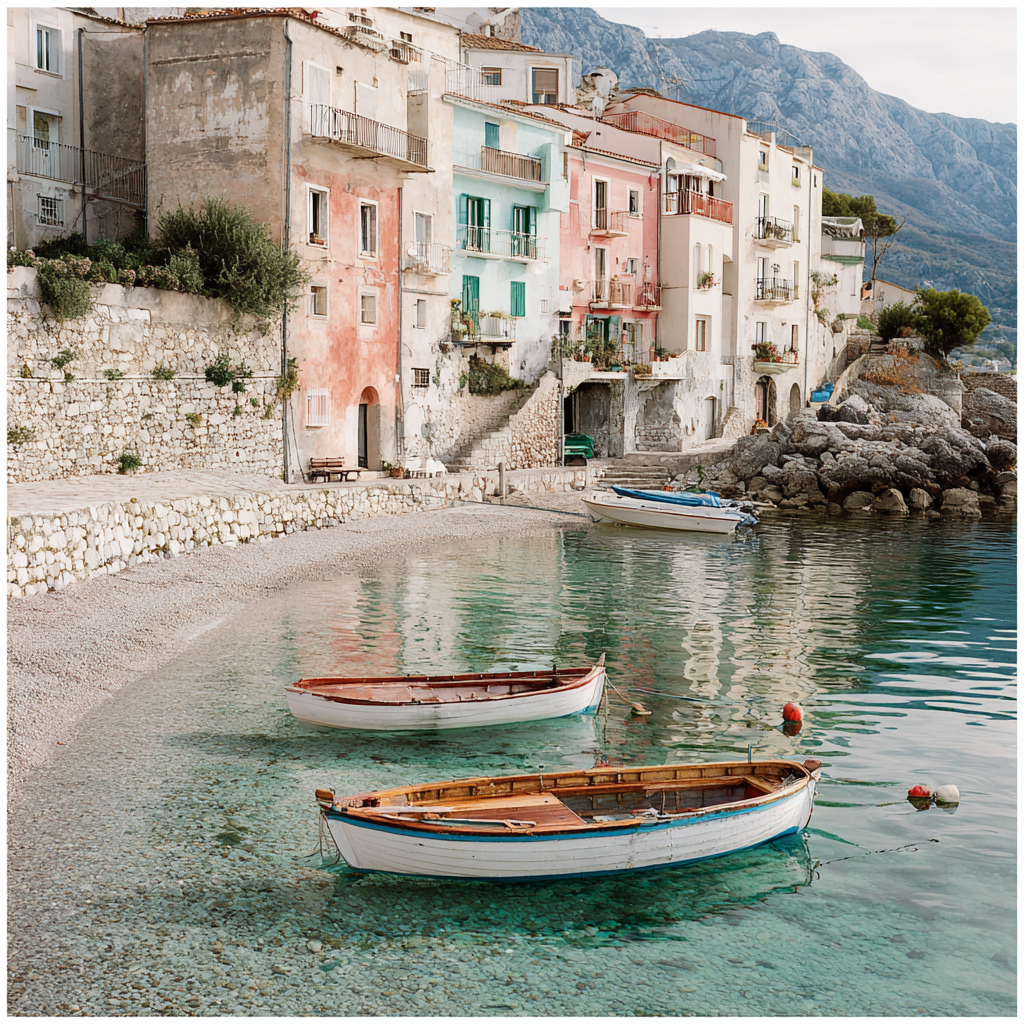
Basilicata's only Tyrrhenian coastline is one of the most beautiful and least visited stretches of sea in Italy. Maratea clings to steep cliffs above crystalline water, presided over by a monumental Christ statue visible for miles. Pastel fishing houses, small coves accessible only by boat, and an almost total absence of mass tourism. The Amalfi Coast used to feel like this — before the world arrived.
Metaponto &
Magna Graecia
Where Pythagoras walked and Greek temples still stand
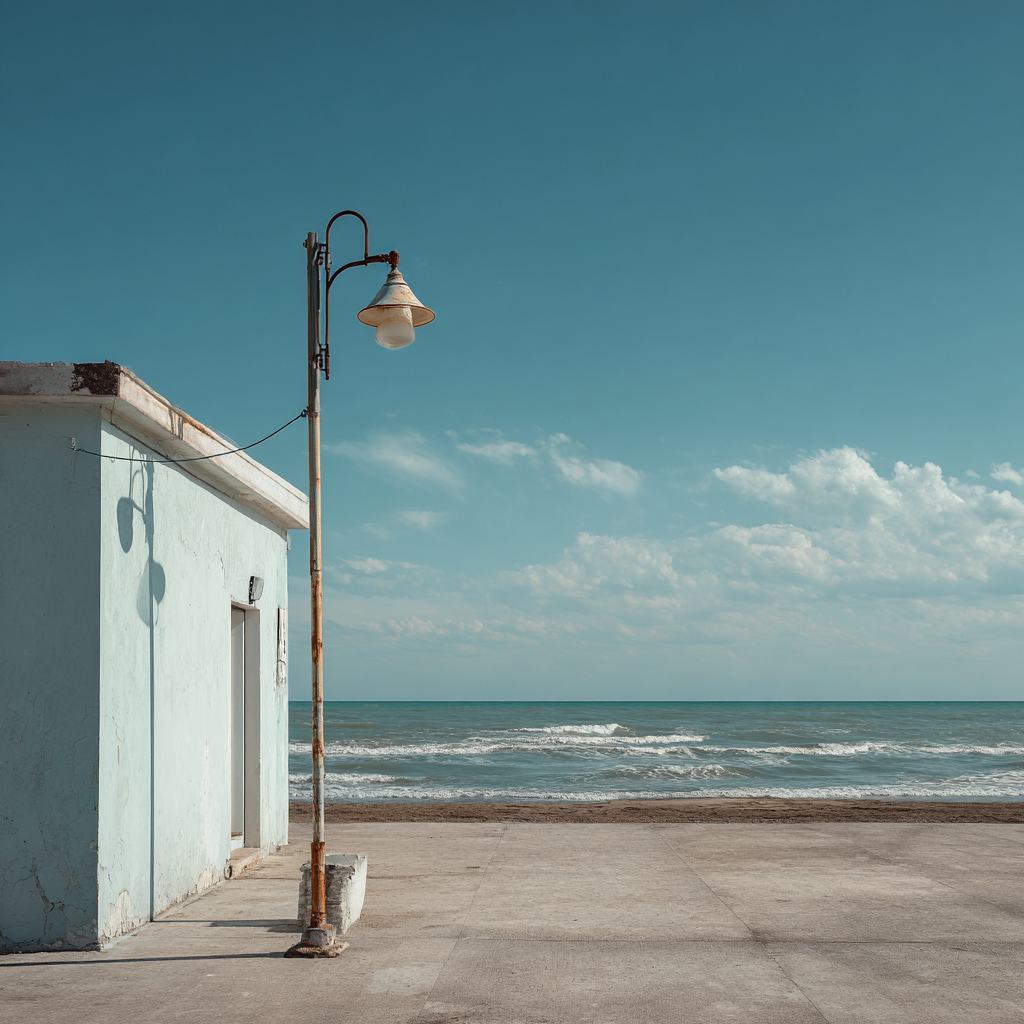
The flat Ionian coastline of Basilicata is ancient beyond reckoning. Metaponto was a major Greek colony — Pythagoras lived and died here, and the ruins of the Temple of Hera still rise from the plain two kilometres from the sea. Miles of sandy beaches stretch with almost nobody on them. Off-season, this coast has a melancholic, end-of-the-world quality that is entirely its own — empty promenades, salt air, the weight of 2,500 years of history just behind the dunes.