Dispatches from the Interior

The
Journal

Essays, observations, and slow readings of a region that reveals itself only to those willing to wait.

Aliano and the Calanchi — where Carlo Levi was exiled in 1935, Basilicata Italy

Aliano: A Land That Reveals Itself Slowly

On the Calanchi, Carlo Levi, and the faith required to see clearly

To stand above the Calanchi of Aliano is to understand something that photographs cannot prepare you for. The view is majestic — but it is a majesty weighted with history, with the particular gravity of a land that has endured everything and surrendered nothing. It does not announce itself. It waits.

Read the essay

More Dispatches

Craco
Essay — Landscape & Memory

Craco: What Remains When Everyone Leaves

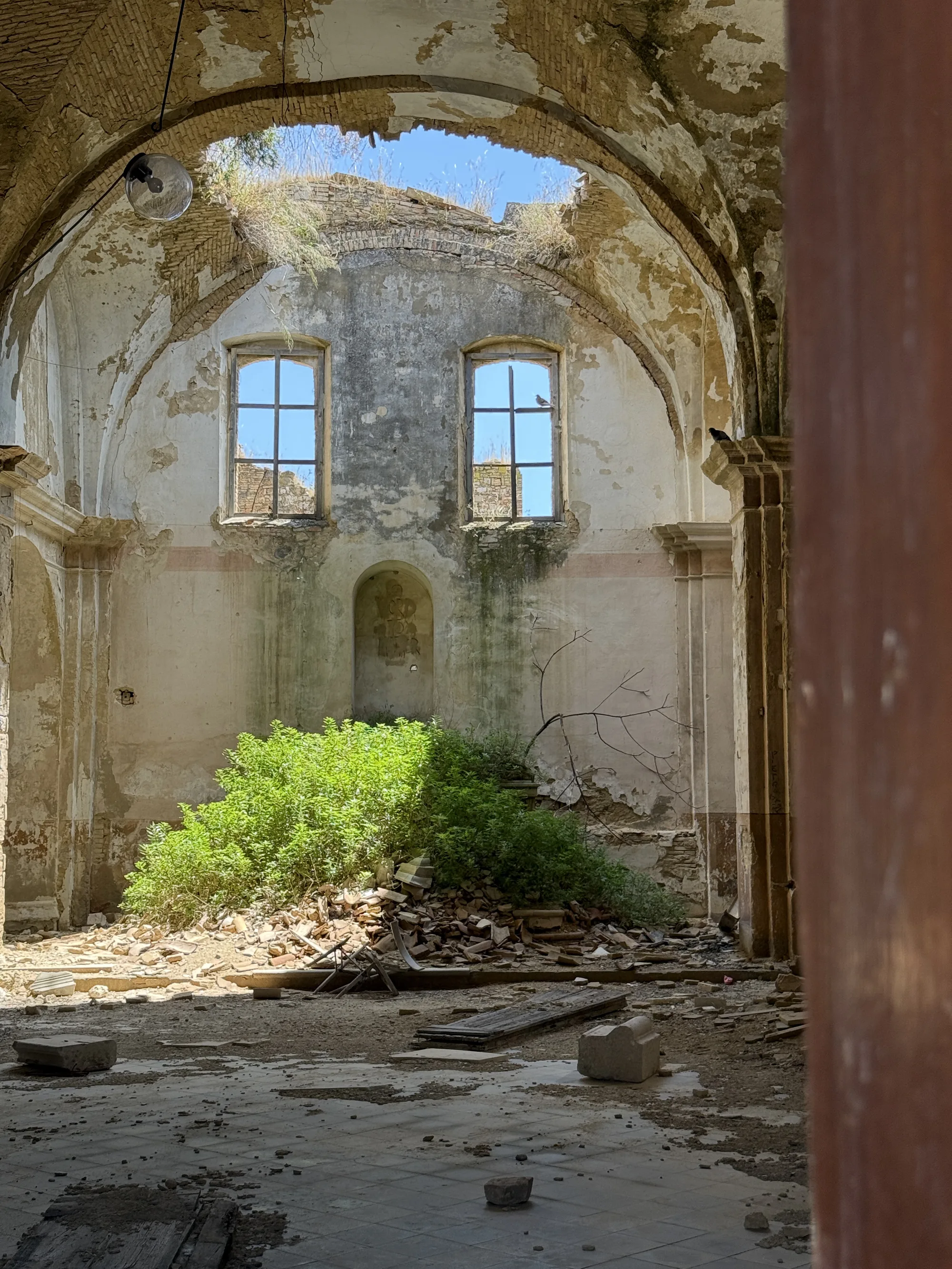
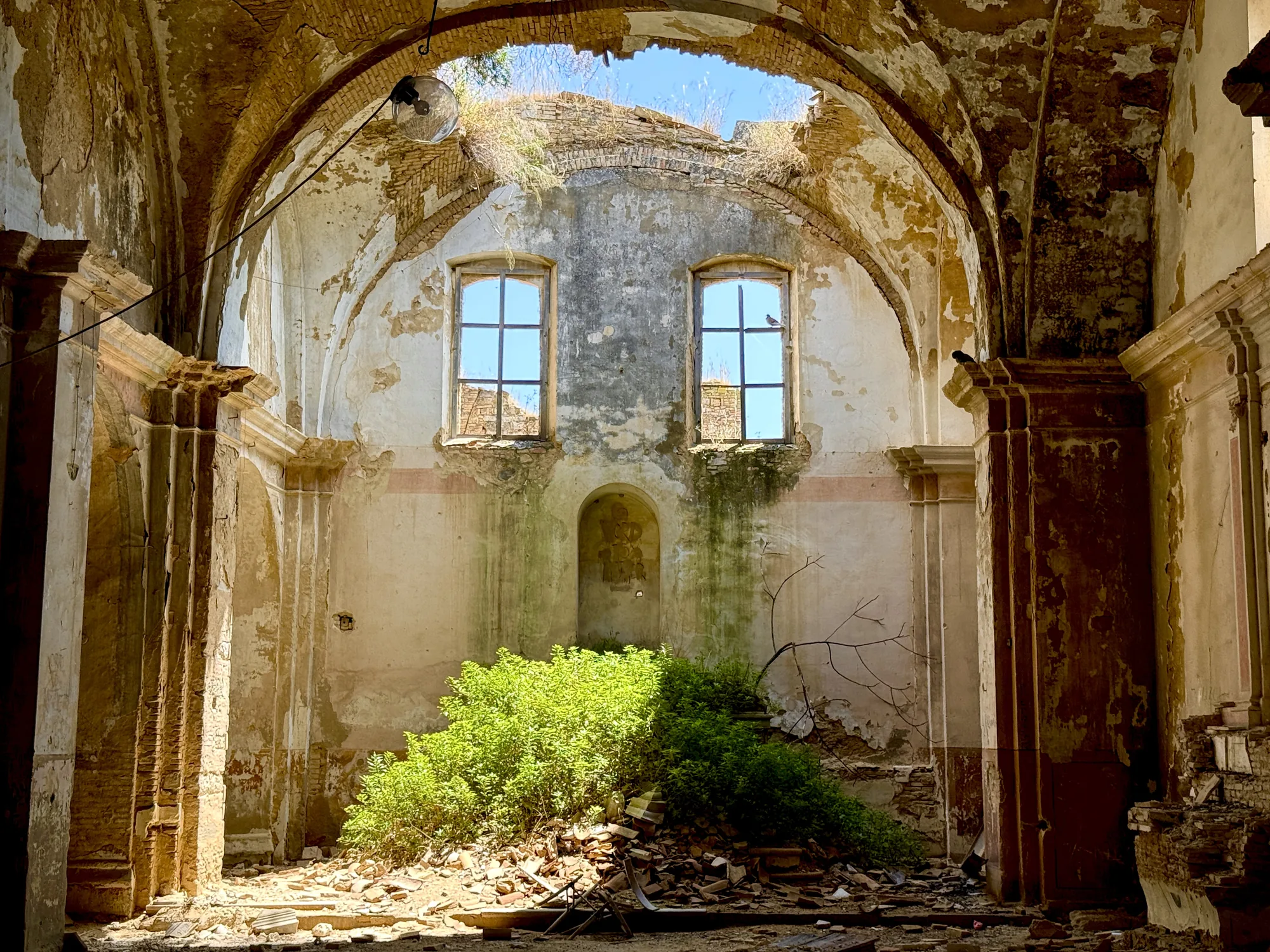
A bush grows where the altar once stood. The roof is open sky. Craco was evacuated in 1963 — but the buildings remain, suspended in the slow act of returning to earth.

Read Now · 12 min
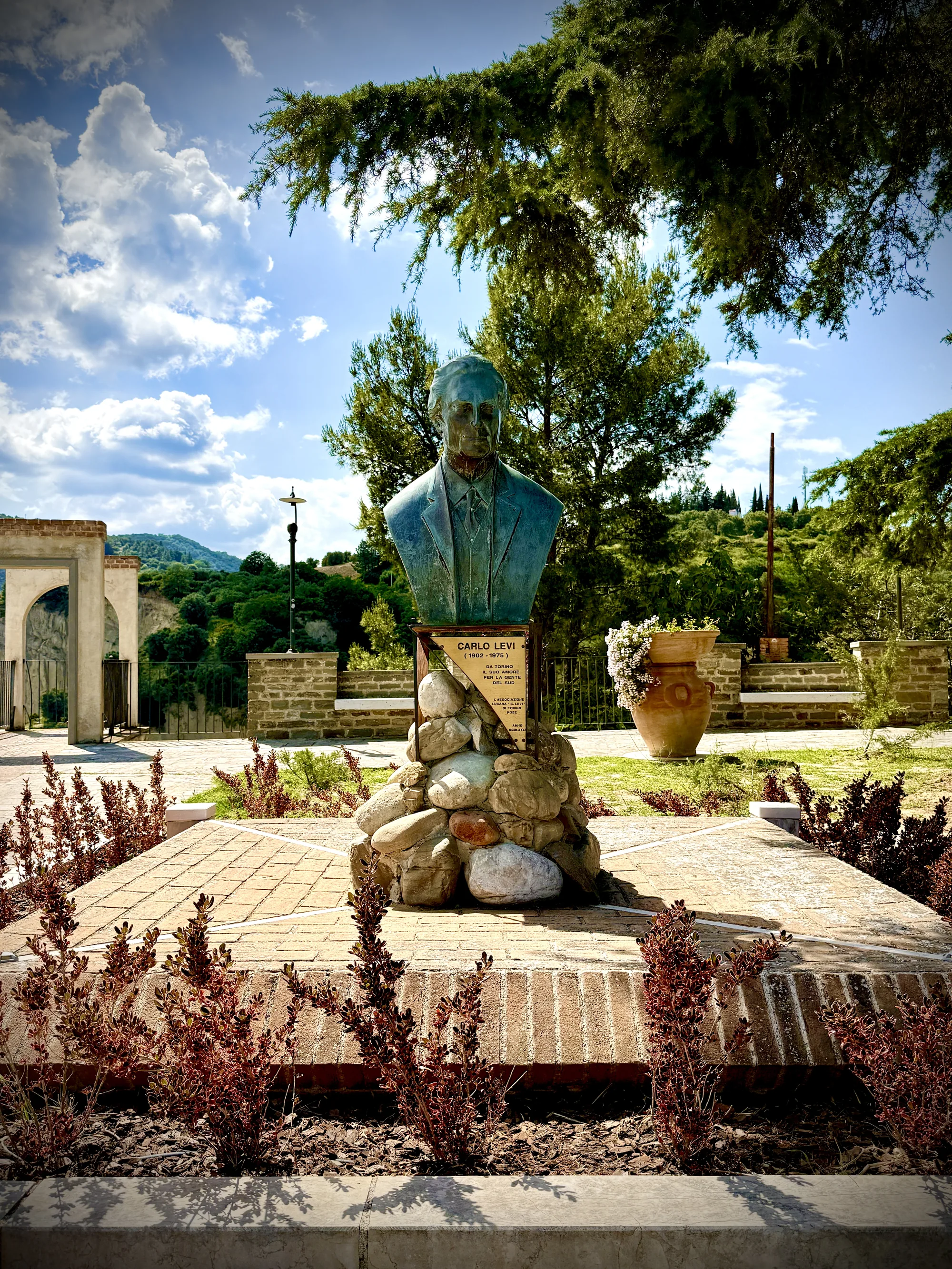
Carlo Levi bronze bust in Aliano — author of Christ Stopped at Eboli, Basilicata
Literary History

What Levi Left Behind

His exile produced a masterwork. But the paintings he made in Aliano tell a different story than the prose — more visceral, less mediated, closer to the bone of what he found there.

Read Now · 8 min
Castelmezzano village and the Dolomiti Lucane rock formations, Basilicata Italy
Place

Castelmezzano & the Dolomiti Lucane

Where the village is inseparable from the rock it grows from. Castelmezzano doesn't sit in the landscape — it is the landscape, stone upon stone upon stone.

Read Now · 10 min
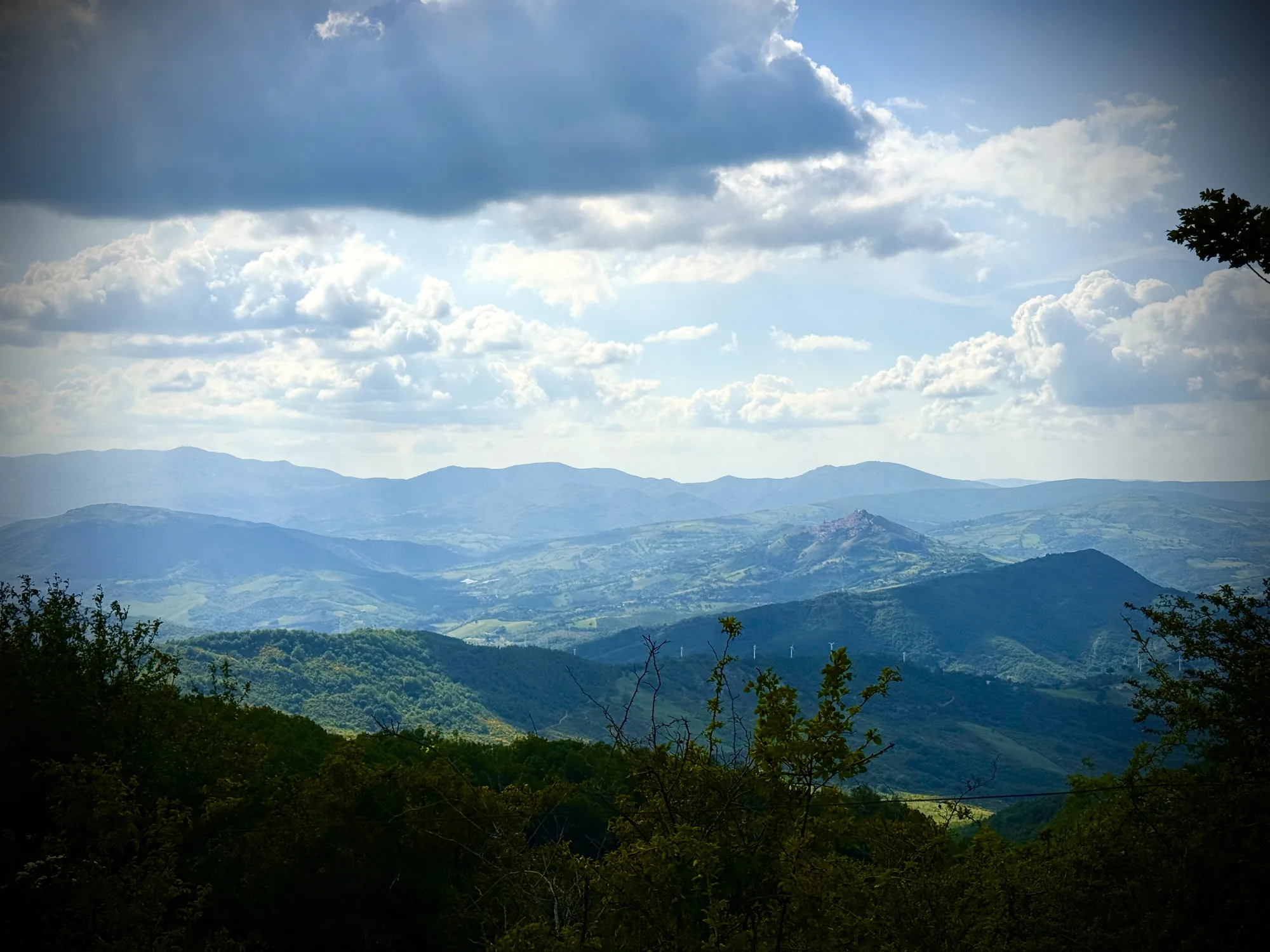
Panoramic view of the Basilicata interior mountains, southern Italy
Wine & Culture

Aglianico del Vulture

The volcanic soils of Monte Vulture produce one of Italy's most underrated reds — a wine of austerity and slow revelation, as uncompromising as the land it comes from.

Read Now · 8 min
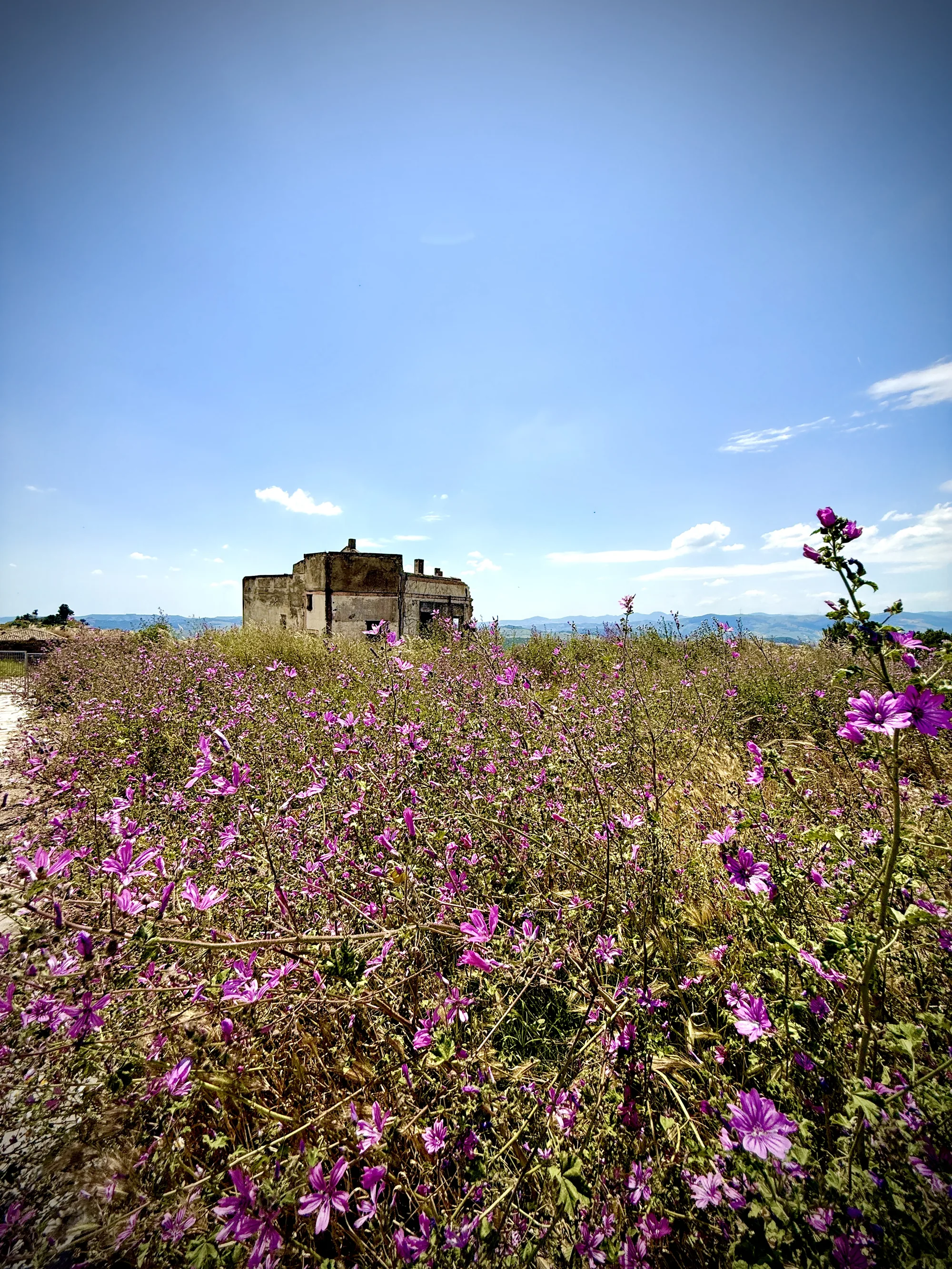
Purple wildflowers and abandoned farmhouse in the Basilicata interior, southern Italy
Landscape

The Interior: On Driving Slowly Through Basilicata

There are roads in Basilicata that feel like the landscape is making an argument. You are not passing through. You are being asked to pay attention.

Read Now · 9 min
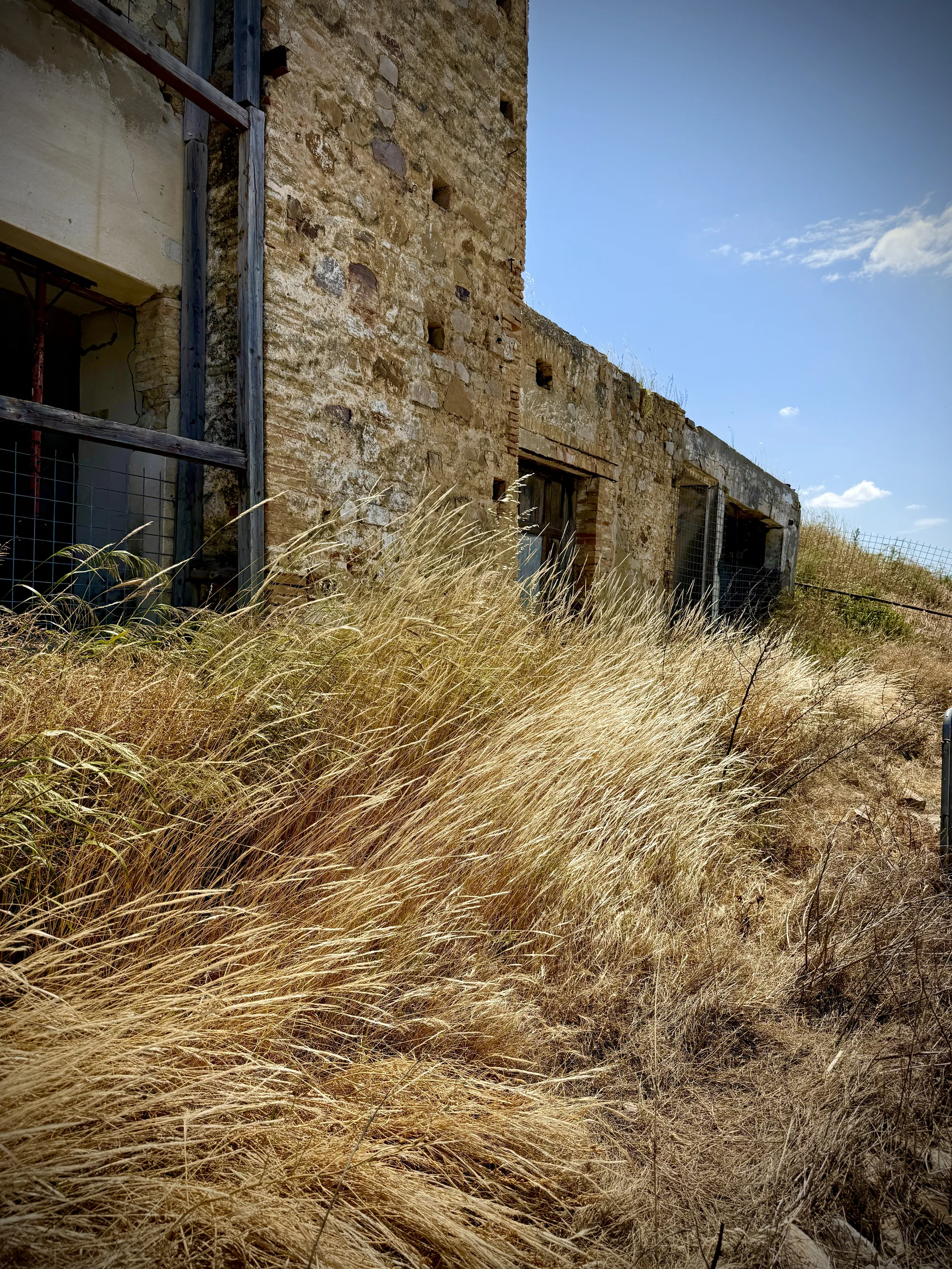
Golden grass and ruins in Craco, Basilicata southern Italy
History

The Southern Question, Revisited

Italy's north-south divide is a century-old wound. Basilicata is its most eloquent document — not as victim, but as witness. What this land preserves that prosperity erased elsewhere.

Read Now · 14 min
Sassi di Matera UNESCO World Heritage Site cave dwellings, Basilicata Italy
Place — Ancient City

Matera: Beauty That Forgives Everything

The summer heat is unforgiving. The light is merciless. And then you see the Sassi, and none of it matters anymore.

Read Now · 10 min
Castelmezzano village and the Dolomiti Lucane rock formations, Basilicata Italy
Travel Planning

Seven Days in Basilicata: The Essential Itinerary

How to spend a week in Italy's most rewarding and least visited region — from Matera to the Calanchi, Craco to Castelmezzano, the coast to the wilderness.

Read Now · 12 min
Panoramic view of the Basilicata interior mountains, southern Italy
Essay — Wilderness & Deep Time

Il Pollino: The Last Wilderness

A thousand-year-old pine. A gorge 400 metres deep. An Albanian village speaking 15th-century Arbëreshë. Italy's largest national park, almost entirely unknown.

Read Now · 14 min
Purple wildflowers and abandoned farmhouse in the Basilicata interior, southern Italy
Essay — Landscape & Contradiction

Beneath the Protected Land: The Val d'Agri Paradox

Europe's largest onshore oilfield. Italy's second national park in Basilicata. The Madonna in procession. The same valley holds all of it simultaneously.

Read Now · 13 min

Aliano: A Land That Reveals Itself Slowly

On the Calanchi, Carlo Levi, and the faith required to see clearly

Aliano, Basilicata  ·  12 min read
The Calanchi clay ravines of Aliano, Basilicata — southern Italy travel guide

There are views that announce themselves and views that wait. The Calanchi of Aliano belong to the second kind. You arrive at the edge and it takes a moment before you understand what you are looking at.

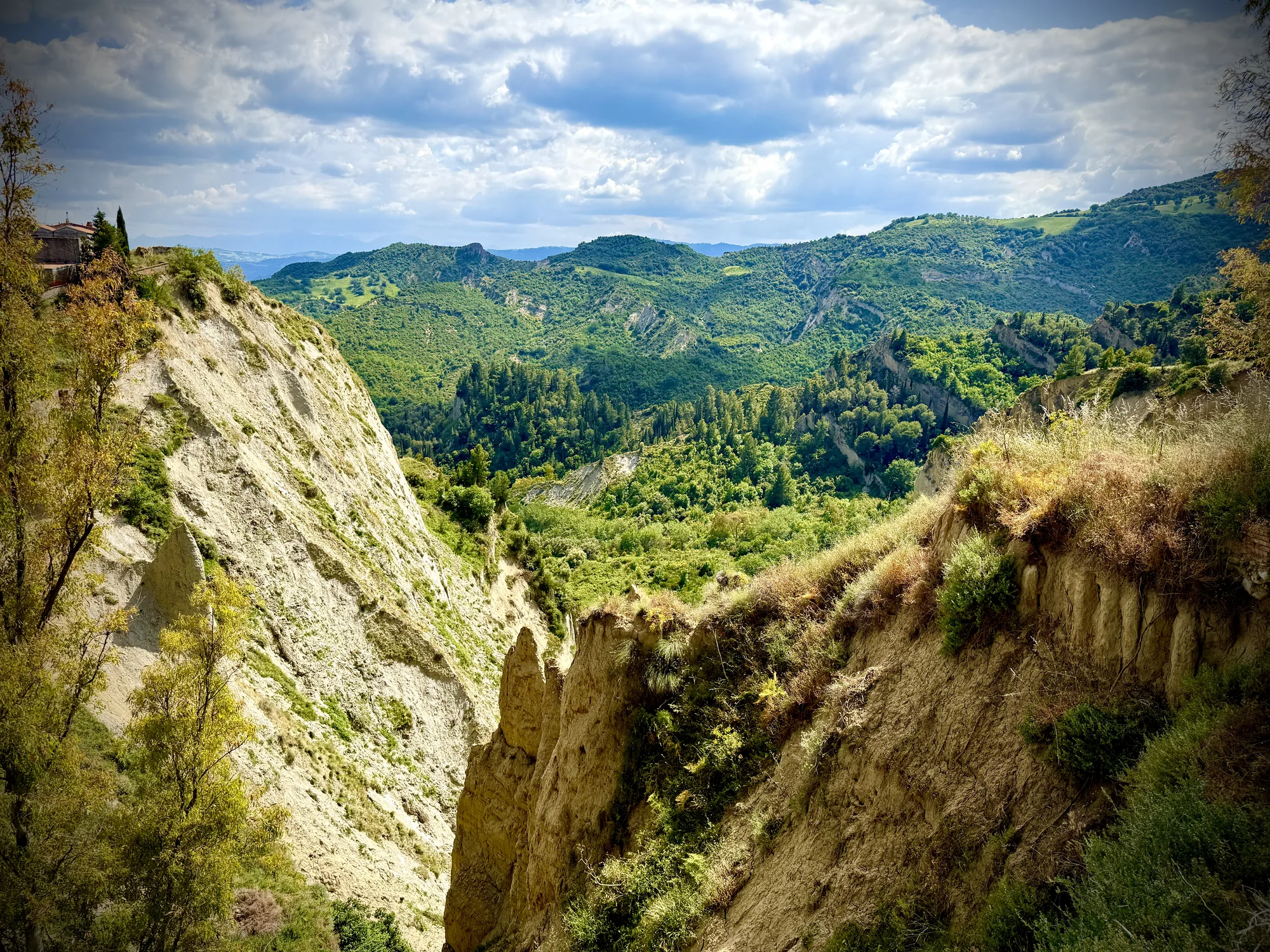
The landscape below is not dramatic in the way that dramatic landscapes usually are — no sudden verticality, no theatrical cliff edge. Instead it opens in long pale ridges of eroded clay, bone-white and ochre, carved by centuries of rain into shapes that feel more geological than geographical. You are looking at time made visible. The earth here has been slowly dismantling itself for millennia, and what remains is a record of that patience.

The view is majestic. But it is a majesty weighted with history — the particular gravity of a land that has endured everything and surrendered nothing. It does not announce itself. It waits for you to be ready to receive it.

The Village Above the Ravines

Aliano sits on a ridge above the Calanchi, a small cluster of houses that has looked down at this landscape for centuries without flinching. The village has the quality common to many Lucanian settlements — a kind of stoic self-containment, as if it long ago made peace with the fact that the world would not come to it.

In 1935 it received an unlikely visitor. Carlo Levi — Turin-born painter, physician, intellectual, and anti-fascist — was exiled here by Mussolini's government, sent to this remote corner of the Mezzogiorno as punishment for his political activities. He was meant to disappear. Instead he looked, listened, and wrote.

Christ stopped at Eboli — meaning that Christianity, civilization, history itself had never reached this land.

— Carlo Levi, Christ Stopped at Eboli, 1945

The book he produced from his exile is one of the great documents of Italian conscience. It is not a travel book, nor quite a memoir, nor purely a work of social criticism — it is all three, fused by the particular lucidity of a man who arrived as an outsider and chose, with increasing conviction, to become something else.

Aliano and the Calanchi — where Carlo Levi was exiled in 1935, Basilicata Italy

The Calanchi from the ridge above Aliano — Valle del Sauro

The Museum as Act of Faith

The Museo Carlo Levi occupies a building in the village center and holds his paintings, manuscripts, and personal effects. To walk through it is to encounter a man in the act of paying attention — paintings of the peasants he lived among, their faces rendered with a directness that refuses romanticization. These are not noble savages. They are people, fully realized, seen by someone who chose to see them.

The museum is an exercise in faith. Not religious faith — though this landscape is saturated with a pre-Christian spirituality that Levi documented with fascination — but faith in humanity itself. The faith that Levi recognized in the people around him, and chose to embrace and serve. He was a Turinese intellectual, a man of the north, a member of the educated class that had by and large looked away from the south. He could have maintained that distance. He chose not to.

There is something clarifying about that choice, standing in the museum looking at his paintings. The decision to see clearly, without condescension, without the comfortable buffer of sociology or aesthetics — it is harder than it sounds. The Mezzogiorno has been looked at for two centuries by northern Europeans and northern Italians who brought their own narratives and found them confirmed. Levi brought his assumptions and found them dissolved.

Carlo Levi bronze bust in Aliano — author of Christ Stopped at Eboli, Basilicata

The Carlo Levi bust in Aliano — Da Torino, a suo amore, per la gente del Sud

What the Calanchi Ask of You

Standing above the ravines on a clear morning, with the hills folding away in every direction toward a horizon that seems impossibly distant, you understand something about why this landscape produces a certain kind of seriousness in those who encounter it.

It is a land that reveals itself slowly — to those who take the time to appreciate it. There is no shortcut to understanding it. The Calanchi do not give themselves to a glance. They require stillness, patience, a willingness to let the scale settle over you gradually rather than trying to grasp it all at once.

This is not a landscape for the itinerary-driven traveler. It is a landscape for the person who is willing to stop, to sit, to look until looking becomes something more than looking.

Levi understood this. He had two years in Aliano, and he used them. The result was a work that outlasted the regime that sent him there, a book that continues to be read by people who want to understand what Italy is — not the myth, but the reality underneath it.

The Calanchi are still there. The village is still there. The museum is still there. And the view from the ridge still asks the same question it has always asked: are you willing to take the time?

The Museo Carlo Levi is open daily in summer. Aliano is approximately 2.5 hours from Bari, 1.5 hours from Matera. The Calanchi are best seen in morning light, when the pale clay catches the low sun and the shadows define the erosion most clearly. Allow a full day.

Craco: What Remains When Everyone Leaves

On silence, abandonment, and the world without us

Craco, Basilicata  ·  12 min read
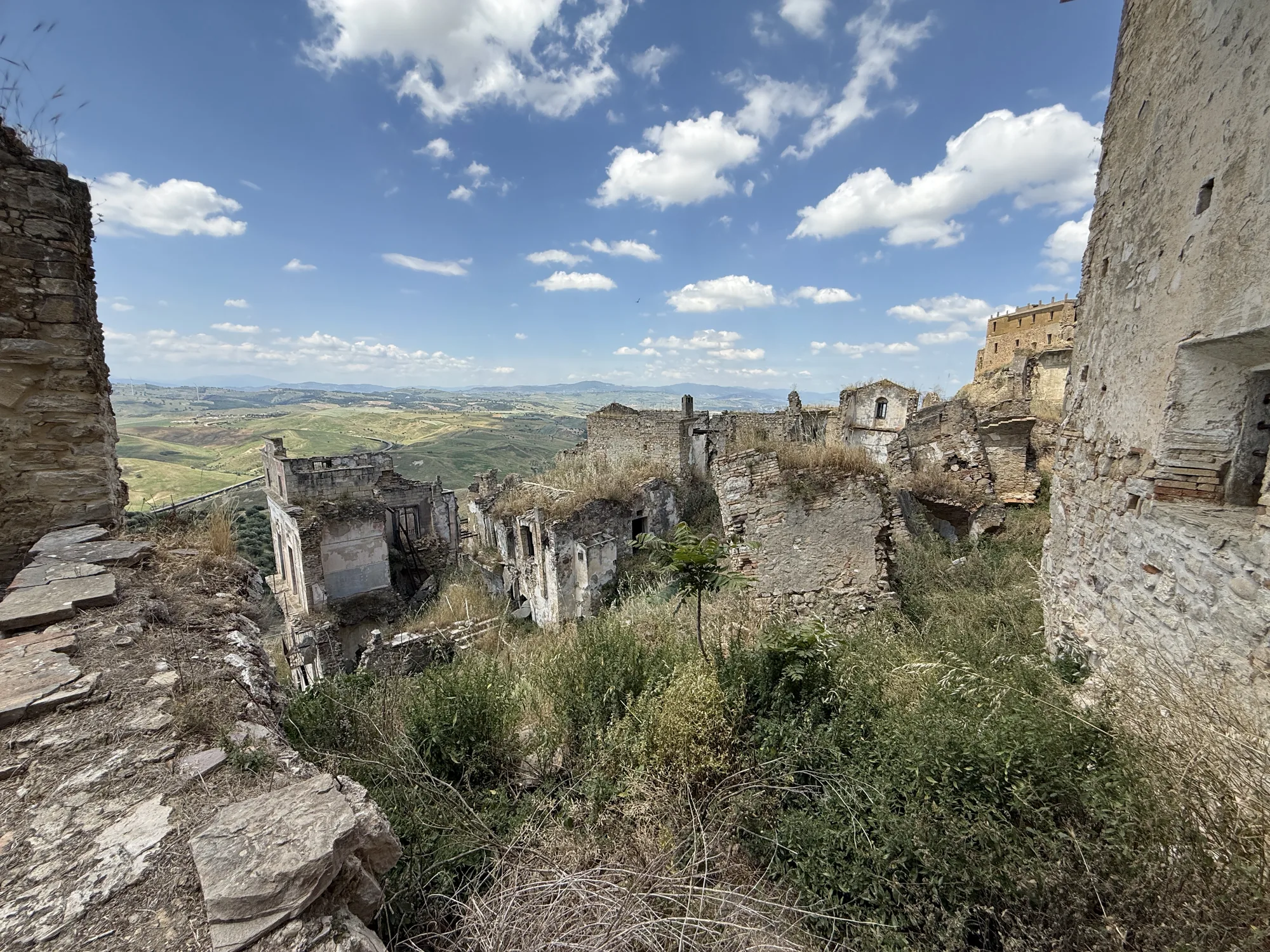
Craco abandoned village ruins spreading across the hillside, Basilicata Italy

The silence had the weight of history. Not the comfortable silence of a countryside afternoon — something older and more deliberate. The silence of a place that stopped mid-sentence and never found its way back.

Alan Weisman wrote a book called The World Without Us. The premise is simple and devastating: what would happen to the planet if human beings disappeared overnight? How long before nature reclaimed the cities, the roads, the monuments we built to outlast ourselves? Weisman calculated it in decades for most things. Centuries for the concrete. Millennia for the plastics.

Walking through Craco, you don't need to imagine it. You can see it happening in real time, at the particular pace that Basilicata does everything — slowly, without apology, with a kind of patient dignity that makes you feel the urgency of your own life as a mild embarrassment.

One Night to Pack

Craco was evacuated in 1963. A landslide had been threatening the medieval village for years — the clay subsoil shifting, the foundations moving almost imperceptibly, the earth making its slow argument. Then the argument became urgent. The residents were given notice and told to go to Craco Peschiera, the new settlement built for them in the valley below.

They left. The buildings stayed.

What you walk into now is not a ruin in the conventional sense — no ivy-covered romanticism, no picturesque decay arranged for visitors. It is a town interrupted. The streets are still streets. The doorways still have thresholds. The church still has its nave, its apse, its columns — and now, growing where the altar once stood, a green bush that has decided this is a perfectly adequate location and sees no reason to apologize for it.

Craco abandoned church interior with bush growing at the altar, Basilicata

The church interior, Craco — the bush at the altar, the sky through the collapsed roof

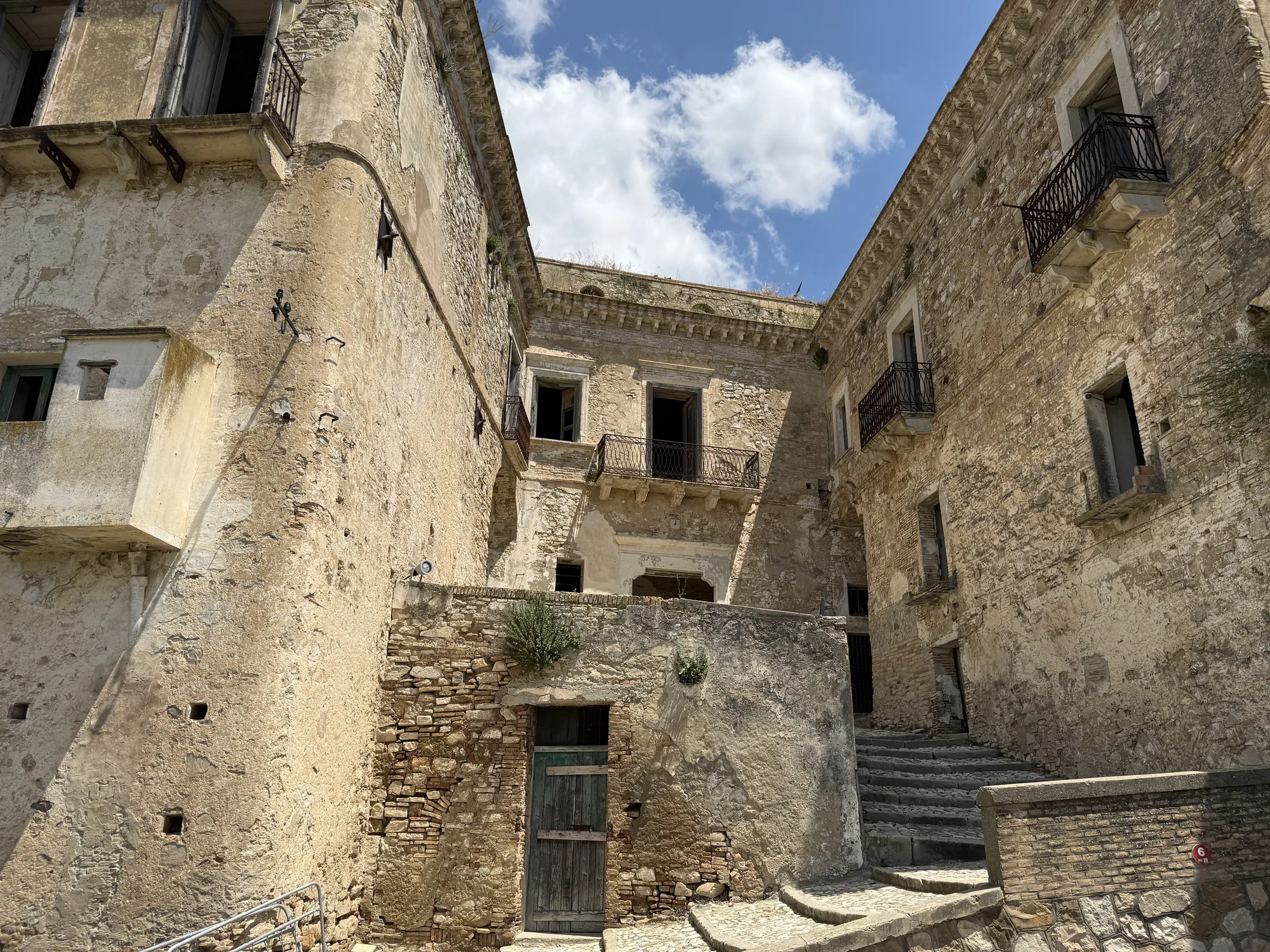
Craco abandoned palazzo courtyard open to sky, Basilicata ghost town

The courtyard — walls still standing, sky where the roof once was

The Birds Hold Court

Two birds were perched in the apse when I arrived. They watched me with the mild curiosity of long-term residents encountering an occasional visitor — not alarmed, not particularly interested. They had been here longer than most people and would be here after I left. The frescoes behind them — saints, I think, though the damp has blurred the iconography almost beyond recognition — seemed to belong to the birds as much as to anyone.

This is what Weisman understood and what Craco demonstrates: nature does not storm back in. It seeps. It finds the crack in the plaster, the gap in the roof tile, the millimetre of opportunity and takes it. Then it takes the next millimetre. Then the next. The bush at the altar was once a seed that found a patch of rubble with some moisture and adequate light. Now it is a statement.

Craco didn't fall. It simply stopped — and nature filled the pause with something quietly magnificent.

— Field notes, Craco 2025

Standing in the nave, looking up through the collapsed roof at a rectangle of blue Basilicatan sky, you feel the weight of it. Not sadness exactly — something more complex. The particular feeling of being in a place that has moved beyond human time into geological time, where the questions being asked are different from the ones you arrived with.

What the Silence Holds

Basilicata has more abandoned settlements than almost any other region in Italy. The emigration of the postwar decades — to Turin, to Germany, to America — hollowed out village after village. Craco is the most dramatic case, the landslide giving the abandonment a clean date and a clear cause. But there are dozens of others: partial abandonments, slow depopulations, villages where the young left and never returned and the old remained until they didn't.

Each one is a document. A record of what happens when the economic logic of a region fails its people, when the south is left to negotiate modernity without the infrastructure to do so. Levi wrote about this — the historical abandonment of the Mezzogiorno by the Italian state, the north's indifference to what lay below Naples. Craco is the physical evidence of that indifference, preserved in amber by a landslide.

But it is also something else. Walking through it, in the silence that has the weight of history, you understand that places like this are not simply evidence of failure. They are evidence of endurance. The people who lived here built something that is still standing sixty years after they left. The church arch has not collapsed. The cobblestones are still cobblestones. The threshold stones are still threshold stones. What they made was made to last, and it is lasting, even as nature slowly, patiently, inevitably makes its counter-argument.

Craco Norman bell tower — medieval stonework Basilicata Italy

The bell tower from below — wildflowers, a wooden cross, and sixty years of silence

Why You Should Go

Craco requires a guide for the interior — the site is technically restricted, though visits are organised regularly from Craco Peschiera below. The walk through the village takes an hour, maybe two if you stop properly. You should stop properly.

What you will find is not a tourist attraction. There is no café, no gift shop, no interpretation board explaining what you are looking at in four languages. There is the village, the silence, the birds, and the slow green argument being made by the vegetation in the nave.

It is one of the most serious places I have visited. Serious in the way that Levi's paintings are serious — not solemn, not mournful, but fully present with the weight of what has happened here and what is continuing to happen. The world without us, in miniature, in the heart of the Italian south.

The silence has the weight of history. Go and feel it for yourself.

Guided visits to Craco are organised from Craco Peschiera, approximately 5km below in the valley. The village is about 2 hours from Matera, 3 from Bari. Morning visits are recommended — the light on the pale stone is extraordinary before midday. Allow at least two hours inside.

Aglianico del Vulture

On volcanic soil, slow time, and the wine that tastes like Basilicata

Monte Vulture, Basilicata  ·  8 min read
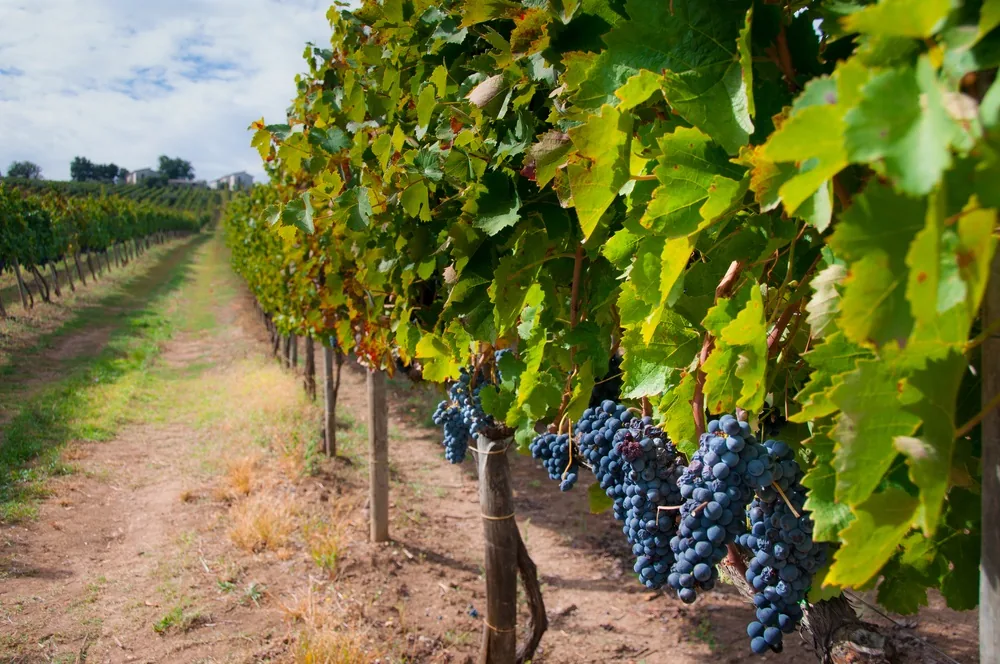
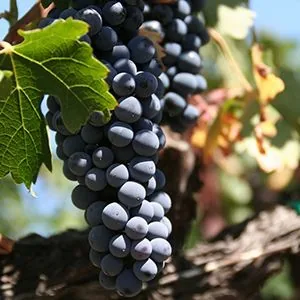
Aglianico del Vulture vineyard on Monte Vulture volcanic soil, Basilicata

There is a category of wine that does not try to please you. It asks, instead, that you meet it halfway. Aglianico del Vulture is that kind of wine.

The grape is ancient — Greek colonists brought it to the southern Italian peninsula sometime around the seventh century BC, though some ampelographers argue for an even older provenance, tracing it back to indigenous Italic varieties that predate the Greek settlements entirely. What is certain is that it has been growing in the volcanic soils around Monte Vulture for a very long time, and that it has absorbed something of that soil into its character. Something mineral and austere. Something that does not yield easily.

Monte Vulture is an extinct volcano in the northern reaches of Basilicata — a landscape of craters now filled with lakes, dense forests on the upper slopes, and on the lower flanks, the vineyards. The soil here is unlike anything else in southern Italy: dark, mineral-rich, volcanic basalt and tuff that forces the vine roots deep in search of water and nutrients. The result, in the glass, is a wine of uncommon complexity and uncommon patience — Aglianico del Vulture needs years, sometimes decades, to reveal what it is.

Aglianico del Vulture grape clusters — the great red wine of Basilicata

Aglianico clusters — dark, dense, uncompromising even on the vine

The Character of the Wine

It is deeply colored — almost opaque in youth, a dark garnet that holds its pigment like a conviction. On the nose, iron and dark cherry and something smoky, almost volcanic, as if the soil is still present in the wine. On the palate, tannins that are significant, structured, demanding. This is not a wine for casual consumption. It requires food — the rich, slow-cooked food of the Lucanian table, lamb and pork and aged cheeses — and it requires time, both in the bottle and in the glass.

What it offers in return is remarkable. With age, the tannins soften and the wine opens into something genuinely profound: layers of dried fruit and leather and mineral complexity that few Italian reds outside Barolo or Brunello can match. The comparison to those northern giants is not accidental — wine critics have been making it for decades, noting that Aglianico del Vulture offers similar depth and aging potential at a fraction of the price.

Aglianico is the Barolo of the south — a wine of austerity and slow revelation, as uncompromising as the land it comes from.

— A recurring observation among those who take southern Italian wine seriously

The irony is that this comparison, while accurate, has done little to lift the wine's commercial profile. Barolo commands international prices and recognition. Aglianico del Vulture remains, like Basilicata itself, largely unknown outside Italy — discovered by the curious and the serious, passed over by the market in favor of more immediately gratifying choices.

A Wine That Reflects Its Region

This is, in the end, what makes Aglianico del Vulture so fitting for Basilicata. The region and its wine share the same qualities: depth that reveals itself slowly, character formed by difficulty, a refusal to perform for those unwilling to pay attention. You cannot rush either of them. You cannot approach either with the expectation of immediate gratification and come away satisfied.

The producers worth seeking out are mostly small family operations that have been farming the same volcanic slopes for generations. Cantina di Venosa, Elena Fucci, Paternoster, and Basilisco are names that appear consistently among those who have done the work of finding them. Elena Fucci in particular — a young winemaker who inherited her family's vineyards and has made them into something exceptional — represents a new generation that is beginning to bring the wine the attention it has always deserved.

The DOCG designation, achieved in 2010 for the Superiore category, was overdue recognition of what the best producers had been doing for decades. It has helped, modestly, with visibility. The wine remains underpriced relative to its quality, which means that for now, at least, those who find it are rewarded not only with an extraordinary bottle but with the particular pleasure of having arrived somewhere before the crowd.

How to Approach It

If you are visiting the Vulture zone, the approach from the south through Melfi gives the best introduction — the Norman castle rising above the town, the volcanic landscape behind it, the vineyards visible on the lower slopes. Cantina di Venosa runs visits and tastings. Several smaller producers will open their cellars by appointment.

If you encounter Aglianico del Vulture in a restaurant — and you will, if you eat in Basilicata — order it young if that is what is available, but know that you are tasting potential rather than achievement. The achievement comes with a Riserva of eight or ten years, opened an hour before the meal, alongside something slow-cooked and unapologetic.

Drink it slowly. Everything in Basilicata rewards patience. The wine is no different.

The Monte Vulture zone is approximately 1.5 hours north of Matera and 2 hours from Bari. Melfi and Venosa are the main towns and both reward a full day's visit beyond the wine — Melfi for its Norman castle and archaeological museum, Venosa for its Roman ruins and the house where Horace was born.

Castelmezzano & the Dolomiti Lucane

On tortuous roads, jewelled villages, and the reward of difficult arrivals

Castelmezzano, Basilicata  ·  10 min read
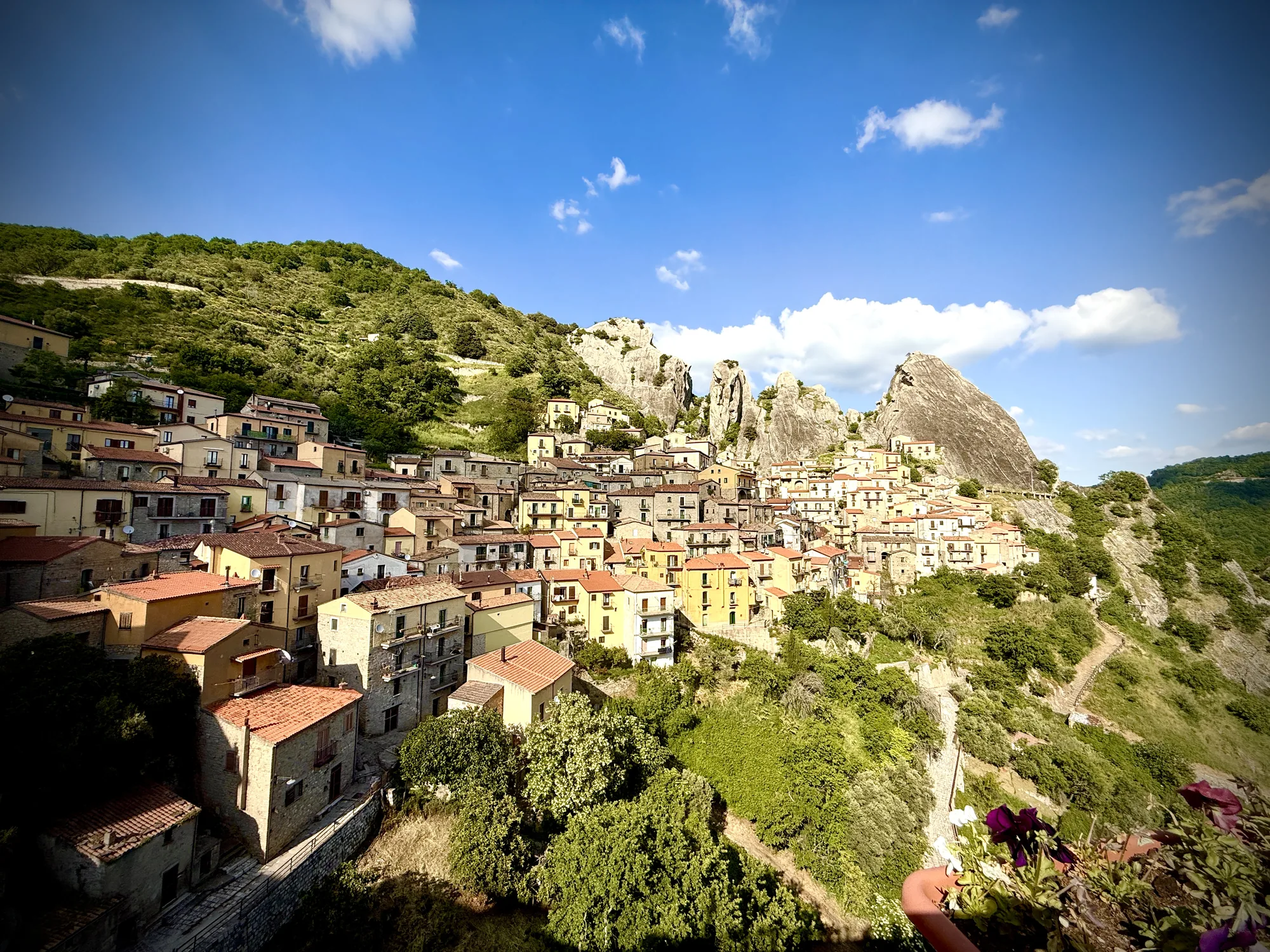
Castelmezzano village and the Dolomiti Lucane rock formations, Basilicata Italy

The road is part of it. This is something Basilicata understands and the rest of Italy has largely forgotten — that the difficulty of arrival is inseparable from the meaning of what you find.

The drive to Castelmezzano is tortuous in the literal sense. The road winds up through the Basento valley, tightening as it climbs, switchback after switchback, the limestone peaks appearing and disappearing through the trees as you ascend. There is no straight line to Castelmezzano. There is no shortcut. The road insists on the full experience, and by the time you arrive — by the time the village suddenly reveals itself, a jewel perched on a jagged edge — you have earned the view in a way that no direct approach could provide.

That reveal is one of the most arresting moments available to a traveler in southern Italy. The village sits wedged between two extraordinary limestone pinnacles that rise from the ridge like something geological and deliberate — as if the rock itself decided to provide a setting. The houses climb the lower flanks of the peaks in tiers of warm stone, their terracotta roofs catching the light, the whole assemblage so precisely fitted to its surroundings that it is impossible to say where the village ends and the mountain begins.

Stone Upon Stone

Castelmezzano does not sit in the landscape. It is the landscape. The distinction matters. Most Italian hill towns maintain a certain separateness from their surroundings — you can see the edge of the town, the point where habitation ends and nature begins. In Castelmezzano that boundary dissolves. The rock the village is built on is the same rock the peaks are made of. The stone of the walls is quarried from the mountain immediately behind them. The streets are cut into the living rock in places, passages that feel less like roads and more like geological features that happened to accommodate human transit.

The Dolomiti Lucane — the Lucanian Dolomites — are a series of these limestone formations that rise from the valley floor with the abruptness of something that does not care about human scale. They are not the Alps; they are not vast. But their verticality is absolute, and their relationship to the villages beneath them is unlike anything else in Italian topography. Castelmezzano and its sister village Pietrapertosa, visible across the gorge on its own pinnacle, have grown from the rock rather than on it, shaped by centuries of proximity into something that feels indigenous rather than imposed.

A jewel perched on a jagged edge — precise, improbable, and entirely at home.

— First impression, Castelmezzano

The village itself is small — a few hundred permanent residents, a handful of narrow streets, a belvedere that looks across the gorge to Pietrapertosa with a directness that makes the two villages feel like a conversation interrupted mid-sentence. There is a church, several restaurants serving the local cuisine of the Basento valley, and the infrastructural apparatus of the Volo dell'Angelo — the zipline that connects the two villages and has brought Castelmezzano a degree of adventure-tourism attention it wears somewhat uncomfortably.

The Stillness Beneath the Drama

Ignore the zipline, if you can. Or take it — it is, by all accounts, extraordinary — but do not let it define what Castelmezzano is. The village is not an adventure destination. It is a place of extraordinary stillness, compressed between geological forces that make ordinary human concerns feel provisional. The drama is in the landscape. The village itself is quiet, unhurried, going about the business of being a very old place in a very old mountain range.

Walk the streets in the early morning or the late evening, when the day visitors have left and the light on the limestone peaks is doing something that photographers travel long distances to see. The rock changes color through the day — pale gold at dawn, bleached white at midday, amber and ochre in the afternoon, something almost pink at dusk. The village below it changes too, catching and releasing the light in rhythms that have nothing to do with human schedules.

This is what the tortuous road delivers. Not just a view — any road can deliver a view — but a place that has remained itself because access was never easy enough to make it convenient. Castelmezzano is what it is partly because the road was always exactly this difficult, filtering out everyone who was not genuinely committed to arriving.

Pietrapertosa & the Full Picture

Castelmezzano and Pietrapertosa are best understood together. They are two villages on facing ridges, separated by the gorge of the Caperrino stream, close enough to shout across but requiring a drive of twenty minutes to reach each other by road. The Volo dell'Angelo connects them directly, but the road between them is worth taking — it descends into the gorge and climbs back out, giving you the full geological context that the village-level view conceals.

Pietrapertosa is higher and wilder, its Saracen ruins visible at the very summit of the pinnacle above the village. It is less polished than Castelmezzano, more obviously a working village that happens to occupy an extraordinary location. Together the two of them make the Dolomiti Lucane case more completely than either can alone.

Plan for a full day. Drive up in the morning, walk Castelmezzano before the visitors arrive, lunch at one of the restaurants on the belvedere, drive to Pietrapertosa in the afternoon, and time your return through the valley for sunset. The road back, taken slowly, with the peaks catching the last light behind you, is the essay that the arrival promised.

Castelmezzano is approximately 1 hour from Potenza and 1.5 hours from Matera. The drive from the valley floor takes 20–30 minutes of switchback roads — allow time and do not rush it. The village has several good restaurants; book ahead in summer. The Volo dell'Angelo zipline operates seasonally and requires advance booking.

Matera: Beauty That Forgives Everything

On merciless heat, timeless stone, and the city that outlasted everything

Matera, Basilicata  ·  10 min read
Sassi di Matera UNESCO World Heritage Site cave dwellings, Basilicata Italy

The summer heat is unforgiving. The July light on the pale limestone is merciless — flat, white, absolute, offering no shadow and no relief. And then you see the Sassi, and none of it matters anymore.

This is the particular gift of Matera: it earns its forgiveness. The harshness of a summer afternoon arrival — the glare off the stone, the heat radiating from surfaces that have been absorbing sun since morning, the absence of shade on the belvedere — all of it is part of the approach. All of it is preparation. And when the city reveals itself across the ravine of the Gravina, carved into the rock in tiers that descend toward the river with the patient logic of something that has been growing for ten thousand years, the discomfort dissolves completely into awe.

There is no other city in Europe quite like it. The Sassi — the cave dwellings that give Matera its identity and its UNESCO designation — are not ruins in any conventional sense. They are the city itself, or were until the 1950s when the Italian government, embarrassed by international attention to what it called the shame of Italy, forcibly relocated the inhabitants to new housing on the plateau above. The cave dwellings were sealed. The inhabitants left. The Sassi fell silent.

The Shame That Became a Wonder

Carlo Levi — whose Aliano essay we published earlier — writing in 1945, described Matera as a city from another time — not medieval but truly ancient, a settlement of cave dwellings that appeared to belong to a pre-Christian, pre-Roman world. The families he encountered there lived alongside their animals in single-room caves, children and goats sharing the same space, malaria endemic, poverty absolute. It was this image — published in Christ Stopped at Eboli and then amplified by a 1948 Life magazine photograph essay — that shamed the Italian government into action.

The action, characteristically, was demolition rather than development. The inhabitants were moved. The caves were closed. The city above the ravine expanded with postwar modernism while the ancient settlement below was left to bats and silence. For decades Matera was a footnote — a curiosity, an embarrassment, a place the south would rather not talk about.

What had been called the shame of Italy became, in time, its most extraordinary treasure.

— The particular justice of Matera's story

Then something shifted. The UNESCO World Heritage designation in 1993 changed the city's relationship to itself. The cave dwellings were gradually reopened, restored, reinhabited — not by the poor families who had been expelled but by boutique hotels, restaurants, and the cultural apparatus of a destination that had discovered its own value. By 2019, when Matera was named European Capital of Culture, the transformation was complete. The shame had become a wonder.

What You Are Looking At

The Sassi are divided into two sections — the Sasso Caveoso and the Sasso Barisano — separated by a ridge on which the cathedral sits. Both descend toward the Gravina gorge in tiers of cave dwellings, rupestrian churches, and later stone buildings that accumulated over the original cave facades across centuries. The oldest inhabited caves date back to the Paleolithic — this is one of the first places in the world where human beings settled permanently, drawn by the fresh water of the Gravina and the defensive advantages of the ravine.

Walking through the Sassi in the early morning — before the heat arrives and before the visitors — you move through layers of time that compress in disorienting ways. A Byzantine fresco in a rupestrian church. A Norman doorway on a cave facade. A Renaissance well in a courtyard that was already ancient when the Renaissance began. The city does not present its history sequentially; it presents it simultaneously, all of it available at once, demanding a kind of attention that tourist itineraries do not usually allow for.

The rupestrian churches are the most undervisited aspect of the Sassi and the most rewarding. Carved directly into the rock, decorated with frescoes that have survived precisely because they were underground and largely forgotten, they offer a different quality of encounter than the polished museum experience of the upper city. Several require a guide; most require a willingness to duck through low doorways and stand in spaces where the rock is close on all sides and the frescoes peer down from ceilings only inches above your head.

The Question Matera Asks

Matera is now, unavoidably, a tourist destination. The boutique hotels in restored cave dwellings charge prices that would have been incomprehensible to the families expelled in the 1950s. The restaurants on the belvedere serve tasting menus to visitors who have come specifically for the experience of eating in a city that was once called a shame. The transformation is real, the investment is genuine, and the city is better preserved and better understood than it was fifty years ago.

The question this site asks about Matera — the question we ask about all of Basilicata — is: what happens after? The Capital of Culture year opened a door. The UNESCO designation brought the world's attention. But the world's attention is brief, and the places that endure in the traveler's memory are the ones that gave them something to think about rather than something to photograph.

Matera, approached properly — in the July heat, arriving in the early afternoon when the light is merciless and the stone is burning, standing at the belvedere as the Sassi reveal themselves across the gorge — gives you something to think about. About time. About the relationship between poverty and beauty. About what survives when everything else is stripped away. About the particular stubbornness of stone.

The heat is unforgiving. The light is merciless. Go anyway. Go in the afternoon. Let it cost you something. The beauty will forgive you everything in return.

Matera is approximately 1.5 hours from Bari and 2.5 hours from Naples. The Sassi are best approached from the belvedere on Via Bruno Buozzi for the full panoramic view before descending. The rupestrian churches require a combined ticket available at the main visitor center. Stay at least two nights — one day is not enough. Arrive in the afternoon, walk in the evening, and be back in the Sassi before the tour groups arrive the following morning.

What Levi Left Behind

On the paintings of Aliano, and what they tell us that the prose could not

Aliano, Basilicata  ·  8 min read
Carlo Levi bronze bust in Aliano — author of Christ Stopped at Eboli, Basilicata

Everyone reads the book. Fewer people look at the paintings. This is a mistake.

Christ Stopped at Eboli is a work of extraordinary prose — analytical, humane, beautifully constructed. It is the record of a northern Italian intellectual encountering a world he did not know existed and choosing, with increasing conviction, to understand it on its own terms. It deserves every word of its reputation.

But Levi was a painter before he was a writer, and the paintings he made during his confinement in Aliano between 1935 and 1936 tell a different story from the prose. Less mediated. More visceral. Closer to the raw encounter with the people he lived among and the landscape that surrounded him.

The portraits in particular — the peasants of Aliano rendered in thick, direct brushwork, their faces meeting the viewer without flinching — have a quality that no amount of literary skill could replicate. Levi the writer could explain these people, contextualize them, place them within the historical narrative of southern Italy. Levi the painter simply saw them. And the seeing, unmediated by language, has a directness that the prose, for all its brilliance, softens.

The Museum in Context

The Museo Carlo Levi in Aliano holds a significant collection of his work — paintings, sketches, manuscripts, and personal effects. It is a modest institution in a small village with limited resources, and it does not have the polished presentation of a major metropolitan museum. This is, paradoxically, part of its value. The works are close. The rooms are quiet. There is no crowd between you and the paintings.

Standing in front of a Levi portrait in Aliano — in the village where it was painted, looking at the face of someone who lived in the landscape you can see through the window — is an experience of unusual compression. The distance between the art and its subject collapses. You are in the place. The painting is of the place. And Levi, who came as an outsider and chose to stay in spirit long after his exile ended — he requested burial in Aliano, and his wish was granted — is present in both.

He came as a prisoner and left as a witness. The paintings are his testimony.

— On Carlo Levi's time in Aliano

What Levi left behind in Aliano is not just a book and a museum. It is a way of looking — an insistence that the people of the south deserved to be seen clearly, without condescension, without the comfortable distance of sociological analysis. His paintings embody that insistence. They are, in the most literal sense, acts of attention. And attention, as this site argues in every essay, is what Basilicata demands and rewards.

The Museo Carlo Levi is located in the center of Aliano village. Opening hours vary seasonally — check ahead. The museum is best visited after walking the Calanchi, when the landscape Levi painted is already present in your memory. Allow 90 minutes.

The Interior: On Driving Slowly Through Basilicata

Some roads are not transport. They are the experience itself.

Basilicata  ·  9 min read
Purple wildflowers and abandoned farmhouse in the Basilicata interior, southern Italy

There are roads in Basilicata that feel like the landscape is making an argument. You are not passing through. You are being asked to pay attention.

The interior of Basilicata is not organized for transit. The roads were not built to move people efficiently from one place to another — they were built, where they were built at all, to connect village to village across a terrain that resisted connection. They wind, they climb, they descend into valleys that appear to have no exit and then find one at the last moment. They are slow roads, and they insist on being driven slowly.

This is not a complaint. The slowness is the point. At speed, the Basilicatan landscape is a blur of pale clay and green hills and distant villages on ridges. At the pace the roads impose — thirty kilometers an hour on a good stretch, less on many — it becomes something else entirely. The scale becomes legible. The relationship between the villages and the terrain that shaped them becomes visible. The history encoded in the landscape — the defensive hilltops, the ancient drove roads, the abandoned farmhouses returning to clay — starts to reveal itself.

The Art of the Wrong Turn

The best driving in Basilicata is done without a fixed itinerary. The GPS is useful for finding specific destinations, but it has a tendency to route you onto the fastest road, which is invariably the least interesting one. The better approach is to have a general direction and allow detours — to turn down a road because the village at the end of it looks interesting from the ridge, to stop when something in the landscape demands stopping, to arrive late at your destination because you found something on the way.

This is how the region reveals itself. Not through the famous sites — Matera, Craco, the Dolomiti Lucane — which are well documented and easy to find. But through the unnamed villages, the roadside chapels, the sudden views over valleys that appear around a bend with no warning and no interpretation board. These are the moments that stay with you, because they were not arranged for you. They happened because you were in the right place at the right speed.

Drive the SS598 between Agri and Sinni. Take the road from Aliano toward Stigliano in the early morning when the Calanchi are catching the low sun. Find the road that drops from the ridge above Craco into the valley below — the one that gives you the ghost town from a distance, the full scale of it visible for the first time, before you arrive at the closer view. These are not scenic routes in any official sense. They are simply roads that go through extraordinary country at the pace that country deserves.

What Slowness Returns

There is something that happens on a slow road through unprepared landscape that does not happen on a motorway or in a city. The mind, freed from the management of speed and traffic, begins to look. Really look. At the quality of light on a particular hillside at a particular hour. At the way a village sits on its ridge — the relationship between the buildings and the rock, the orientation toward the sun, the logic of a settlement that predates any planning consideration except survival.

This is, in miniature, what Basilicata offers that the faster, more accessible parts of Italy cannot. Not just beautiful things to look at, but the conditions under which looking becomes something more than looking. The roads enforce the pace. The pace enables the attention. The attention is the experience.

A rental car is essential for exploring the Basilicatan interior — public transport connects the major towns but misses almost everything worth seeing. Allow more time than you think you need. The roads are slower than the map suggests and the detours are better than the destinations.

The Southern Question, Revisited

What Basilicata preserves that prosperity erased elsewhere

Basilicata  ·  14 min read
Golden grass and ruins in Craco, Basilicata southern Italy

Italy has a question it has never fully answered. It is called, in the Italian political tradition, the questione meridionale — the Southern Question. It has been asked, in various forms, since unification in 1861. Basilicata is one of its most eloquent and least heard answers.

The question, simply stated, is this: why is the south of Italy so different from the north — economically, socially, infrastructurally — and what, if anything, should be done about it? The gap between the per capita income of Lombardy and Basilicata is larger than the gap between Germany and some Eastern European nations. The emigration from the south over the past century and a half — to Turin, to Milan, to Germany, to America — represents one of the great voluntary depopulations in modern European history. The abandoned villages of Basilicata are its physical record.

The standard explanations range from the geographic — the terrain was never suited to the agricultural surplus that generated northern wealth — to the historical — the Bourbon kingdom that preceded unification was extractive rather than developmental — to the political — the unified Italian state has consistently prioritized northern industrial interests over southern agricultural ones. All of these explanations contain truth. None of them is complete.

What Levi Understood

Carlo Levi arrived in Basilicata in 1935 as a political prisoner and left with a question of his own: not why is the south poor, but what has the south preserved that the north, in its prosperity, has lost? His answer was not romantic. He did not idealize the poverty he witnessed or pretend that the malaria and infant mortality and grinding agricultural labor of the Lucanian peasants were anything other than what they were.

But he recognized something in the culture he encountered — a relationship to time, to community, to the land — that had no equivalent in the modernizing Italy he had come from. A pre-Christian relationship to the natural world. A fatalism that was not resignation but a different kind of engagement with reality. A dignity that had nothing to do with material circumstance.

This is what Basilicata preserves. Not poverty — poverty is not a cultural achievement and should not be fetishized. But the culture that formed in the condition of poverty, the ways of being human that developed in the absence of the infrastructure that shapes modern Italian life. These are not the same thing, and the distinction matters.

The Digital Southern Question

The Southern Question has a new dimension that Levi could not have anticipated. The culture that the Italian south preserved through its historical isolation — its slower pace, its relationship to land and season, its community structures, its resistance to the homogenizing forces of modernity — has acquired a new value in the context of the digital age.

What the north and the rest of the developed world are now desperately seeking — slowness, presence, authenticity, relief from the algorithmic acceleration of contemporary life — is precisely what the south never gave up. Not by choice, but by circumstance. And yet the result is the same: a culture that remained human in ways that prosperity, in its rush, forgot to preserve.

Basilicata is not an answer to the Southern Question in any political or economic sense. The infrastructure gaps are real, the emigration continues, and the challenges of economic development in a region without significant industry or tourism infrastructure are genuine. But it is an answer to a different question — one that the developed world is only beginning to articulate: what did we lose in gaining everything we wanted, and where might we find it again?

The south, patient as always, has been holding it for us.

This essay is part of The Argument Meditations — the philosophical foundation of this publication.

For further reading on the Southern Question: Carlo Levi, Christ Stopped at Eboli (1945); Robert Putnam, Making Democracy Work (1993); John Dickie, Blood Brotherhoods (2011). For the contemporary economic picture: the annual reports of SVIMEZ, the Association for the Development of Industry in Southern Italy, provide the most rigorous data.

Seven Days in Basilicata:
The Essential Itinerary

How to spend a week in Italy's most rewarding and least visited region

Basilicata, Southern Italy  ·  12 min read
Panoramic view of the Basilicata interior mountains, southern Italy

A week in Basilicata is enough to understand why people who find it rarely stop talking about it. It is not enough to exhaust it — nothing is — but it is enough to move through its distinct zones with something approaching the pace the region deserves.

This itinerary assumes a rental car, which is non-negotiable. Basilicata's interior cannot be reached by public transport in any meaningful way, and the roads — slow, winding, insistent — are themselves part of the experience. It assumes a base that moves, ideally two nights each in Matera, the Aliano area, and Castelmezzano, with day trips radiating outward. And it assumes a willingness to stop when something demands stopping, which in Basilicata happens constantly.

The itinerary below works best in spring (April-June) or autumn (September-October) — the light is extraordinary, the heat manageable, and the tourist infrastructure, such as it is, operating without the pressures of high summer.

Day 1 — Matera: Arrival and First Encounter

Arrive in Matera in the afternoon. Check in, then do nothing except walk to the belvedere on Via Bruno Buozzi and let the Sassi reveal themselves across the Gravina gorge. Do not consult a guidebook. Do not plan a route. Just look, for as long as it takes.

In the evening, eat in the Sasso Caveoso — the lower of the two Sassi districts, quieter than the Barisano. Order anything with lamb or aged pecorino. Drink local wine. Go to bed early. You need the morning light.

Where to stay: A cave hotel in the Sassi is worth the cost for at least one night — the experience of sleeping in a dwelling that has been inhabited for ten thousand years is not replicated anywhere else.

Day 2 — Matera: The Sassi in Depth

Be in the Sassi before 8am. The tour groups arrive around 10. In those two hours, with the early light on the pale stone and almost nobody around, you will have one of the best mornings available to a traveler in southern Italy.

Spend the morning in the rupestrian churches — the cave churches carved directly into the rock and decorated with Byzantine frescoes. The Chiesa di Santa Maria de Idris and the Cripta del Peccato Originale (a short drive outside the city, worth it) are the most significant. Both require patience with the access arrangements but reward it.

Afternoon: the Museo Nazionale della Siritide in Metaponto is a day trip worth considering — 90 minutes by car, returning via the Tavole Palatine Greek temple ruins. Or stay in Matera and walk the Murgia plateau across the Gravina gorge for the reverse view of the Sassi.
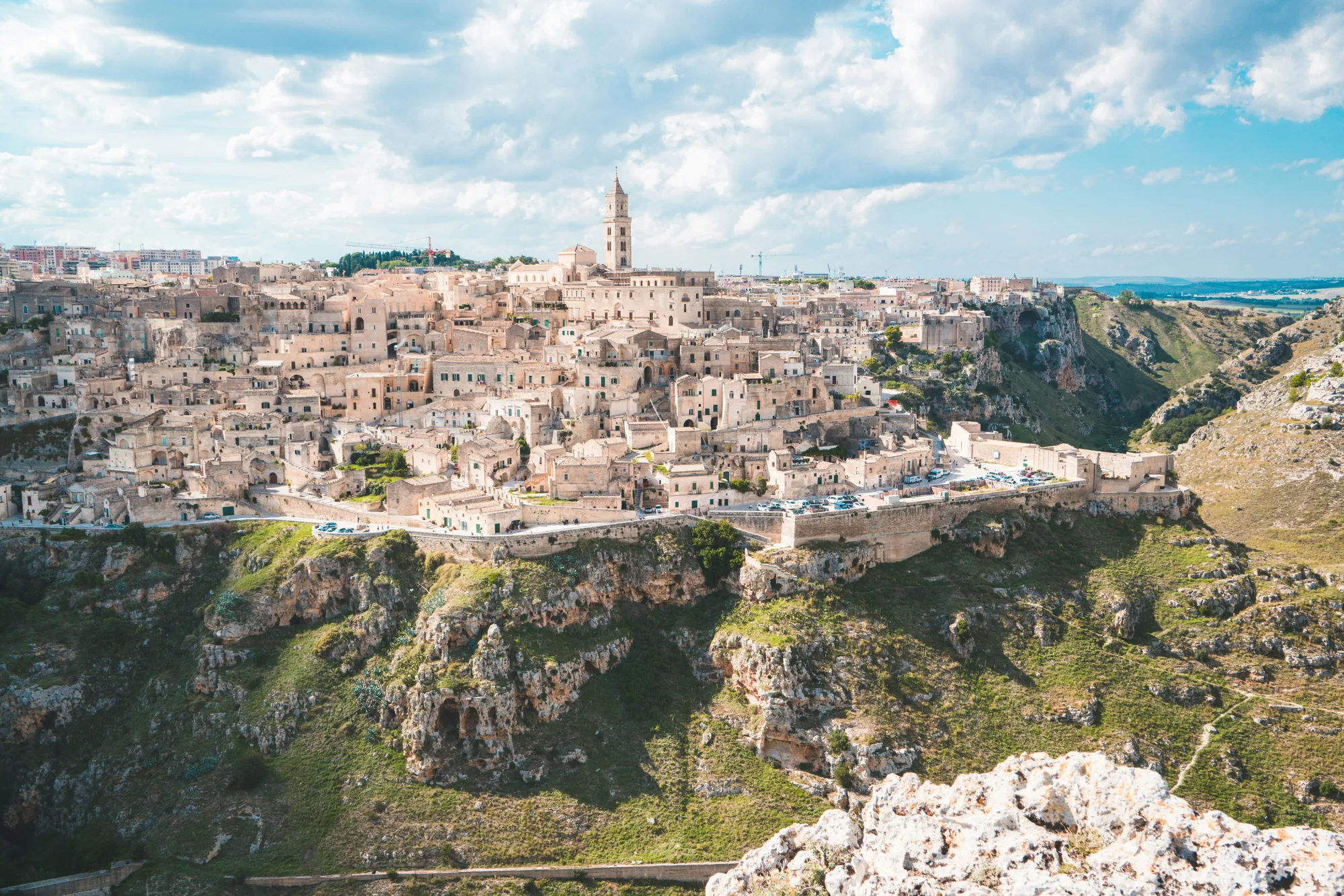
Sassi di Matera UNESCO World Heritage Site cave dwellings, Basilicata Italy

The Sassi di Matera — one of the oldest continuously inhabited settlements on earth

Day 3 — Drive to Aliano: The Calanchi and Levi Country

Leave Matera after breakfast and drive southwest toward Aliano. The journey takes about 90 minutes and passes through the broad agricultural valley of the Agri river before climbing into the clay landscape that announces the Calanchi zone. You will know you have arrived when the earth changes color.

Park at the edge of Aliano village and walk to the Calanchi viewpoint before doing anything else. The pale clay ravines below the village, best seen in morning light when the shadows define the erosion most sharply, are your introduction to the landscape that shaped Carlo Levi and everything this site is built around.

Spend the afternoon in the Museo Carlo Levi — his paintings, manuscripts, and personal effects housed in the village where he was exiled in 1935. Read the wall texts slowly. Look at the portraits. This is not a museum to rush.

Evening in Aliano or the nearby town of Stigliano. The restaurants are simple and the food is extraordinary — this is cucina povera at its most honest, using ingredients that have been grown in this soil for centuries.
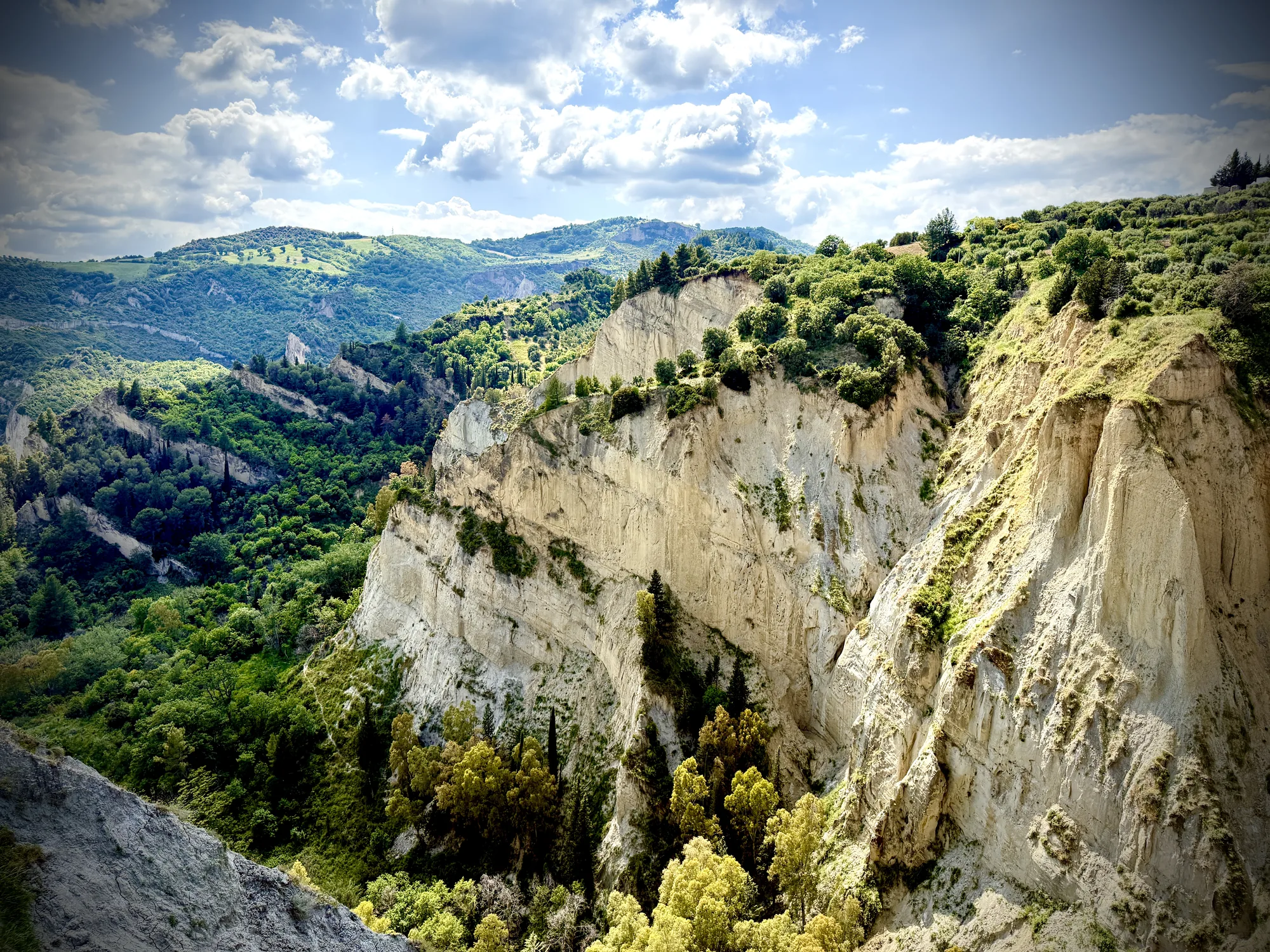
The Calanchi clay ravines of Aliano, Basilicata — southern Italy travel guide

The Calanchi of Aliano — bone-white clay ravines shaped by centuries of patient erosion

Day 4 — Craco and the Ghost Towns

Drive from Aliano toward Craco — about 45 minutes, passing through the kind of interior landscape that makes you understand why people left and why those who stayed never quite stopped talking about it. The road drops into valleys and climbs back out with a persistence that feels almost argumentative.

Craco requires a guided visit — arrange in advance through the Craco Peschiera visitor center in the valley below the abandoned village. The guided walk through the medieval streets takes 60-90 minutes. Allow time before and after to simply look at the village from the valley road — the full silhouette of what was left behind is visible from a distance that the interior cannot give you.

Afternoon: drive to Pisticci or Tursi, both hill towns with a similar quality of abandonment-and-endurance that characterizes the Basilicatan interior. Neither is on the tourist circuit. Both are worth an hour of wandering.
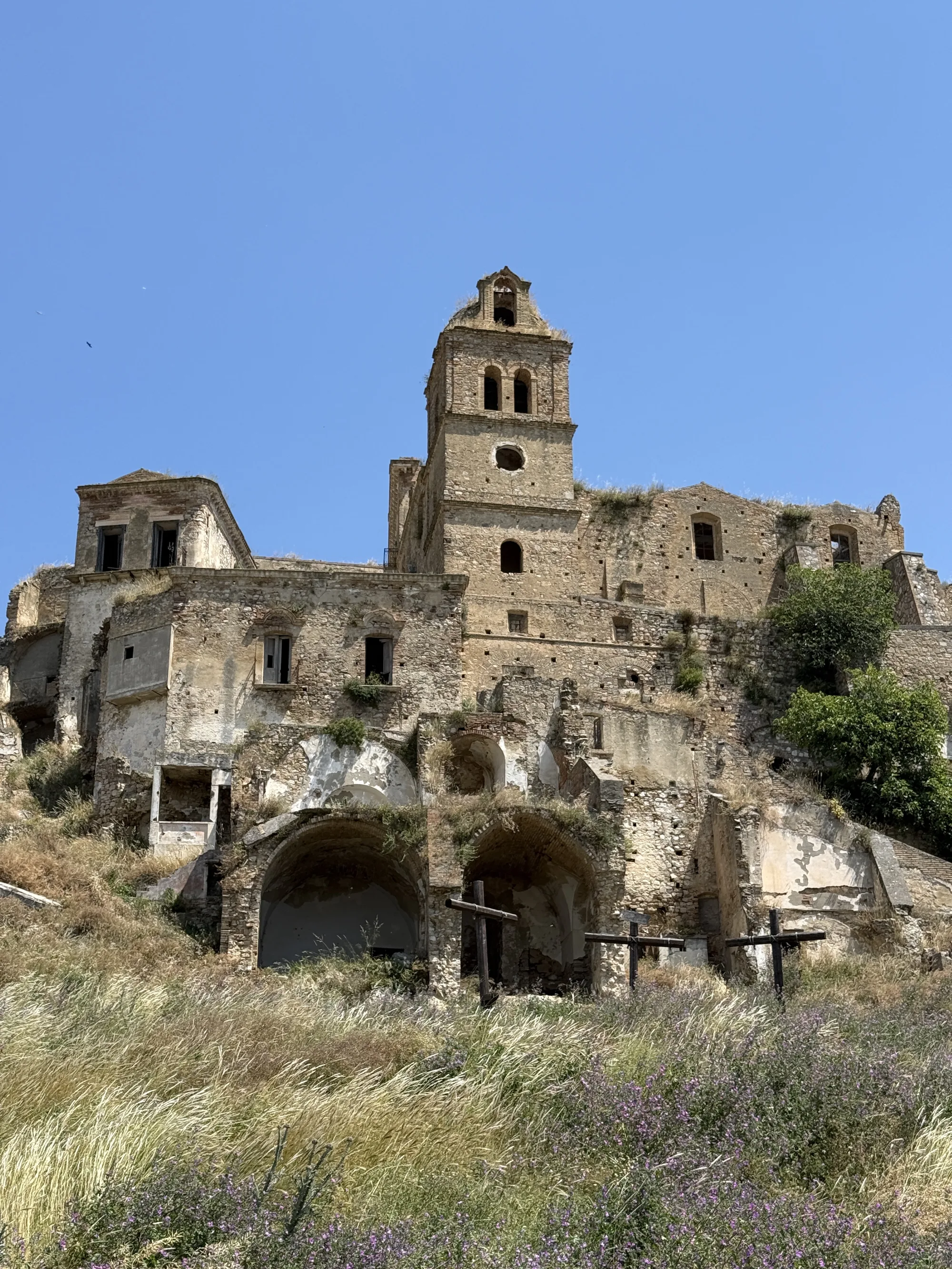
Craco Norman bell tower — medieval stonework Basilicata Italy

Craco — evacuated in 1963, suspended ever since in the slow act of returning to earth

Day 5 — Drive North: Monte Vulture and Aglianico

Today covers the most ground — drive north from the Craco area toward Monte Vulture, the extinct volcano in the northern reaches of the region. The journey takes about two hours and crosses through the broad Basento valley, passing Potenza on the ridge to the west if you want to detour into its extraordinary brutalist civic architecture.

The Vulture zone rewards a slow afternoon: the twin crater lakes of Monticchio, the Norman castle at Melfi, and if you have arranged it in advance, a visit to one of the Aglianico del Vulture producers. Elena Fucci's estate near Barile is worth the effort — her Titolo is one of the finest wines made in southern Italy and the vineyard sits directly on the volcanic slopes of the Vulture.

Venosa, birthplace of the Roman poet Horace, is 20 minutes from Melfi and deserves an hour — the archaeological park and the extraordinary unfinished Trinità abbey church are among the most atmospheric ancient sites in Basilicata.

Where to stay: Melfi or Venosa for the night — both have good small hotels and a completely different character from the clay-and-silence interior you've been moving through.

Day 6 — Castelmezzano and the Dolomiti Lucane

Drive south from the Vulture zone toward Castelmezzano — about 90 minutes through the Basento valley. The approach from the valley floor is the right approach: the limestone pinnacles announce themselves from a distance and the road tightens steadily as you climb, the switchbacks insisting on the full ceremony of arrival.

Spend the morning in Castelmezzano — walk the stone streets before the day visitors arrive, find the belvedere that looks across the gorge to Pietrapertosa, eat at one of the small restaurants in the village. The afternoon belongs to Pietrapertosa — drive the 20 minutes, climb to the Saracen ruins at the summit if the path is open, look back at Castelmezzano from the opposite ridge.

The Volo dell'Angelo zipline connecting the two villages operates seasonally and requires booking in advance. It is, by all accounts, extraordinary. But the walk between the villages via the Sentiero delle Sette Pietre is quieter and gives you the gorge at human pace.
Castelmezzano village and the Dolomiti Lucane rock formations, Basilicata Italy

Castelmezzano — a jewel perched on a jagged edge, inseparable from the rock it grows from

Day 7 — Maratea: The Tyrrhenian Farewell

Drive west from Castelmezzano toward Maratea on the Tyrrhenian coast — about 90 minutes through the Agri valley and into the mountains that separate the interior from the sea. The descent toward the coast is one of the most dramatic drives in the region: the landscape changes completely as the limestone gives way to the maritime cliffs and the Tyrrhenian appears below.

Maratea rewards an unhurried final day. Walk down to the porto, swim in the clear water, eat fish for the first time in a week. The Cristo Redentore statue on the summit above the town is worth the drive up — the view from the feet of the statue takes in the entire curve of the Gulf of Policastro and, on a clear day, the outline of Sicily.

This is a different Basilicata from the interior — lighter, more Mediterranean, easier. After six days of clay ravines and ghost towns and volcanic wine country, it functions as a kind of exhale. You have earned it.

Practical Notes for Your Basilicata Trip

Getting there: Fly to Bari (45 minutes from Matera) or Naples (2.5 hours). Both have good connections from major European cities. Rome is 4 hours by car.

Car rental: Essential. Pick up at the airport and keep it for the full week. The roads are slow — budget more driving time than Google Maps suggests.

When to go: April to June and September to October. July and August are hot and the tourist infrastructure around Matera becomes crowded. The interior is always quieter.

Language: English is spoken in Matera and Castelmezzano. In the interior villages, Italian is essential. A few words of dialect — Lucano rather than standard Italian — will be appreciated enormously.

Budget: Basilicata is significantly cheaper than northern Italy or the Amalfi Coast. Excellent meals for €25-35 per person including wine. Cave hotels in Matera are the main expense — budget €150-250 per night for the experience, less for standard accommodation.

What to read before you go: Carlo Levi, Christ Stopped at Eboli (1945). Non-negotiable. Read it on the plane.

This itinerary can be compressed to five days by skipping Monte Vulture or Maratea, or extended to ten by spending more time in each zone. Basilicata rewards slowness. Whatever time you have, use less of it driving and more of it stopping.
Il Pollino: The Last Wilderness

On Italy's largest national park, the ancient pines that outlived empires, and what it means to enter a landscape that has no interest in you

Parco Nazionale del Pollino, Basilicata  ·  14 min read
Panoramic view of the Basilicata interior mountains, southern Italy

There is a tree in the Pollino that was alive when Frederick II issued the Constitutions of Melfi. When Dante was writing the Commedia, it was already old. When Columbus reached the Americas, it had been standing on this ridge for five hundred years. It is still there.

The Pino Loricato — Pinus leucodermis, the Bosnian pine — is the signature organism of the Pollino massif. It grows only at altitude, only in a handful of locations in Europe, and only with extreme slowness: a trunk the diameter of a barrel may represent six hundred years of growth. The trees you find on the high ridges of the Pollino, twisted by millennia of wind into shapes that seem more sculpted than grown, are among the oldest living things in Italy. Some have been dated at over a thousand years. They predate every institution, every border, every political arrangement that currently organizes this territory.

To walk among them is to undergo a recalibration of time that no meditation app can replicate.

The Scale of the Place

Italy's largest national park covers 192,565 hectares — nearly 2,000 square kilometres — straddling the border between Basilicata and Calabria across the highest section of the southern Apennines. It was established in 1993, the same year UNESCO designated the Sassi di Matera, part of a moment of belated recognition that the south's most significant assets were precisely those that decades of development policy had failed to exploit.

The park contains thirty-six municipalities, spread across two regions, each with its own administrative culture and its own relationship to the protected territory. The towns of Rotonda and Viggianello are the main visitor entry points on the Basilicatan side. The Calabrian town of Civita — a community of Albanian origin, settled by refugees fleeing the Ottoman conquest of the Balkans in the 15th century, still preserving its Arbëreshë language and Orthodox rites — is one of the most extraordinary small communities in southern Italy, largely unknown outside the region.

The landscape the park protects ranges from Mediterranean scrub at lower altitudes to the beech forests that cover the middle slopes and the high rocky ridges above the treeline where the Loricato pines grow. The highest point, Serra Dolcedorme at 2,267 metres, is the highest peak in the southern Apennines south of the Gran Sasso. The massif receives significant snowfall from November through April. In July and August, the high ridges offer temperatures fifteen degrees cooler than the Ionian coast forty kilometres to the east.

The Wildlife That Remained

The Pollino is one of the last strongholds of large carnivore presence in southern Italy. The Apennine wolf — Canis lupus italicus, the wolf that was worshipped by the Samnites and demonized by the shepherds whose flocks it predated for centuries — was never entirely eradicated from the Pollino, even during the 20th-century campaigns that reduced Italian wolf populations to fewer than a hundred individuals. The park's establishment and subsequent protection have allowed the population to recover. There are now estimated to be several dozen wolves in the Pollino area. You will not see them. Their presence, which you will feel in the quality of the silence and occasionally in the tracks on a muddy path, is sufficient.

The golden eagle nests on the limestone cliffs above Viggianello and the Raganello gorge. The Eurasian otter — extirpated from most of Italy by the mid-20th century — has recovered in the clean rivers of the park, particularly the Mercure and the upper Sinni. The otter's presence is an ecological indicator of extraordinary significance: this animal cannot survive in degraded river systems. Its presence means the water is clean, the fish populations healthy, the riparian ecosystem functioning. In the context of southern Italian rivers, where agricultural runoff and untreated sewage have devastated most water systems, this is remarkable.

The bird life of the Pollino is exceptional and largely undocumented in the English-language literature. The peregrine falcon, the eagle owl, the lesser kestrel, the red-backed shrike — these are not rare birds in the Pollino, though they are rare or absent across most of central and northern Italy. The park's relative isolation from intensive agriculture has preserved the insect populations on which many of these species depend.

The Raganello Gorge

The most dramatic landscape feature of the Pollino is not the high ridges but the gorge. The Raganello — a seasonal river that flows through a canyon it has been cutting for millennia into the limestone of the southern Pollino — has created a ravine that at its deepest is over 400 metres from rim to water. The walls are vertical in places. The light at the canyon floor is a cathedral light — narrow, angled, the sky a strip of blue far above.

The gorge is accessible by guided walk from the village of San Lorenzo Bellizzi, on the Calabrian side. The walk involves wading — the river must be crossed multiple times, and the water is cold even in summer. It requires a guide and appropriate footwear. It is worth every inconvenience.

The geological time visible in the canyon walls — the layers of limestone laid down in a Mesozoic sea, folded and fractured by the tectonic collision that built the Apennines, then cut by water over millions of years — is the Pollino argument made in stone. This is not a landscape that came into being for human purposes. It preceded us by geological epochs and will outlast us by the same margin. To stand at the canyon floor and look up at 400 metres of limestone is to feel, briefly, the correct scale of things.

The Albanian Villages

The communities of Albanian origin — the Arbëreshë — settled in the Pollino area in the late 15th and early 16th centuries, fleeing the Ottoman conquest of Albania and the Balkans. They were invited by the Neapolitan kingdom, which needed to repopulate territories devastated by plague and war, and they settled in the high valleys of the southern Apennines, where they preserved their language, their Byzantine Orthodox rites, and a cultural distinctiveness that six centuries of Italian influence have not erased.

Civita, the most accessible of these communities on the Basilicatan-Calabrian border, holds a small museum of Arbëreshë culture and celebrates its Albanian heritage with an intensity that communities of more recent immigrant origin might find instructive. The language spoken here is a form of 15th-century Albanian, preserved almost unchanged because this community had no reason to update it. It is closer to the Albanian spoken by Skanderbeg, the Albanian national hero, than to the Albanian spoken in Tirana today.

The Easter celebration in Civita, with its Byzantine Orthodox rites conducted in Arbëreshë — a language that most Albanians cannot understand — is one of the most extraordinary liturgical events in southern Italy. It draws scholars of Byzantine culture, diaspora Albanians on pilgrimage to their historical communities, and the occasional traveler who stumbled onto it by accident and cannot afterward adequately explain what they witnessed.

How to Enter Properly

The Pollino does not reward the brief visit. A day trip from Matera or the coast will give you a view and a photograph. It will not give you the place. The park requires at least three days — two if you are pressed — based in one of the hill towns on the Basilicatan side (Rotonda and Viggianello are the most practical) or, for the more adventurous, in a rifugio on the upper slopes.

The visitor center in Rotonda is the best starting point: trail maps, current conditions, guide contacts, and the small but excellent natural history museum that explains the geology, ecology, and human history of the park in a way that the landscape itself cannot. Read the museum first, then walk.

The Piano Ruggio, the high plateau below the Loricato pine stands, is accessible by road from Viggianello — a winding but manageable drive that brings you to 1,550 metres and the beginning of the high trails. From Piano Ruggio, the walk to the ancient pines is two hours on well-marked trail. Do it in the morning before the afternoon clouds build. Sit with one of the thousand-year-old trees for a while before you leave. It will not notice you. That is the point.

The Pollino National Park visitor center is in Rotonda (parcopollino.gov.it). The Piano Ruggio road from Viggianello is open May through October. The Raganello gorge walk (3–4 hours) requires a guide and advance booking through the San Lorenzo Bellizzi visitor point. The park is approximately 2.5 hours from Matera, 1.5 hours from the Ionian coast.

RELATED READING

Seven Days in Basilicata →The Southern Question, Revisited →Aliano: A Land That Reveals Itself Slowly →

RELATED READING

What Levi Left Behind →Aliano: A Land That Reveals Itself Slowly →On Driving Slowly Through Basilicata →

RELATED READING

Craco: What Remains When Everyone Leaves →Matera: Beauty That Forgives Everything →Il Pollino: The Last Wilderness →

RELATED READING

Val d'Agri: Beneath the Protected Land →On Driving Slowly Through Basilicata →Seven Days in Basilicata →

RELATED READING

Aliano: A Land That Reveals Itself Slowly →The Southern Question, Revisited →On Driving Slowly Through Basilicata →

Beneath the Protected Land: The Val d'Agri Paradox

On Europe's largest onshore oil field, the national park above it, and what it means when extraction and preservation occupy the same valley

Val d'Agri, Basilicata  ·  13 min read
Purple wildflowers and abandoned farmhouse in the Basilicata interior, southern Italy

The valley is beautiful in the way that guilt is sometimes beautiful — the surface luminous, the depths complicated. The Agri river runs clear through its valley floor. The hills above are forested, the villages perched on defensible ridges as they have been since the Bronze Age. And beneath all of it, at depths of three to four kilometres, sits one of the largest accumulations of petroleum in Western Europe.

The Val d'Agri oilfield was discovered in the 1980s through exploratory drilling that nobody in the valley had asked for. Commercial extraction began in the 1990s. By the 2010s, Basilicata had become Italy's primary oil-producing region — accounting for roughly 80% of the country's domestic oil production at peak output. The irony, for a region that had spent 150 years being told it had no resources worth developing, was not lost on anyone.

The question of what to do with the knowledge was considerably more difficult than the discovery itself.

The Parco Nazionale Appennino Lucano

The Parco Nazionale dell'Appennino Lucano Val d'Agri Lagonegrese was established by decree in 2007, forty years after the first discussions about protecting this territory began and well into the period of active oil extraction below it. It covers approximately 68,000 hectares across the central and southern interior of Basilicata — the highlands between the Agri and Sinni valleys, the forested slopes of the Appennino Lucano, and the upper watershed of the rivers that flow toward the Ionian coast.

It is the smaller and less famous of Basilicata's two national parks, and it has been treated accordingly — neither the infrastructure investment nor the visitor numbers that the Pollino attracts have arrived here with any consistency. The park has a visitor center in Marsico Nuovo, trail networks that are maintained unevenly, and a management structure that has spent much of its existence navigating the fundamental contradiction of its situation: protecting a landscape whose subsoil is actively being exploited by one of the world's largest energy companies.

The park is beautiful precisely because this territory resisted development. Its forests — beech, oak, chestnut — are among the most intact in southern Italy. The Agri valley floor has a pastoral quality, a combination of riparian woodland and traditional agriculture, that has largely disappeared elsewhere in the Mezzogiorno. The villages within the park boundaries — Marsicovetere, Viggiano, Calvello, Sarconi with its famous beans — are the kind of small southern Italian communities that exist in tension between preservation and abandonment, each one a negotiation between those who stayed and those who left and those who are still deciding.

The Infrastructure You Do Not See

ENI, the Italian energy company, operates the Val d'Agri oilfield under concession from the Italian state. At peak production in the mid-2010s, the field produced approximately 100,000 barrels per day — a modest number by global standards, but enormous in the context of a region of 550,000 people and a national energy matrix heavily dependent on imports.

The extraction infrastructure is largely invisible from the roads. The wellheads are on private land, screened by vegetation. The pipelines are underground. The Centro Oli di Viggiano — the oil processing facility that receives crude from the wells and prepares it for transport to the Taranto refinery by pipeline — is tucked into a valley below the town of Viggiano, visible from above but not from the main roads that tourists use.

This invisibility is partly deliberate and partly structural. ENI has invested significantly in the aesthetics of its Basilicatan operations, aware that the optics of heavy industry in a protected landscape require management. The company has also invested in the region — sponsoring cultural events, funding infrastructure, contributing to the local economy in ways that have made its presence complicated to oppose cleanly.

The royalties that the Italian state pays to Basilicata for the extraction of its resources — a share negotiated over decades of political pressure from the regional government — have funded schools, roads, and public services that the region would otherwise have struggled to afford. The extraction has made things possible. It has also made things complicated.

The Water Question

The Agri river feeds the Pertusillo reservoir, the largest artificial lake in Basilicata, which supplies drinking water to approximately two million people across Basilicata, Puglia, and Campania. The reservoir sits within the oil concession area. The relationship between the extraction activities and the water supply has been the subject of consistent scientific concern and inconsistent regulatory response for twenty years.

In 2016, a significant environmental incident at the Centro Oli di Viggiano — the details of which were disputed between ENI and regional authorities for years — brought the question to national attention briefly before it receded again. The precautionary principle, which would suggest that Europe's largest onshore oilfield should not be operating in the immediate catchment area of a reservoir supplying drinking water to two million people, has been applied inconsistently.

This is not an anti-industry argument. It is an observation about complexity. The valley holds both things simultaneously: the extraction that funds the region's public services, and the water that keeps the region's population alive. The tension between them is managed, imperfectly, by institutions whose interests do not always align with each other or with the population they serve.

Viggiano: The Town That Oil Built

Viggiano is the most prosperous small town in Basilicata, which in the context of the region's chronic underdevelopment means that it has a functioning economy, maintained public spaces, and a demographic profile that does not skew entirely toward the elderly. It also has the highest rate of ENI employment in the region and a relationship with the energy company that is, in the way of company towns everywhere, both mutually beneficial and quietly coercive.

The town is also the home of the Madonna di Viggiano, the most venerated religious icon in Basilicata — a Byzantine-style image of the Virgin that is carried in procession between Viggiano and the sanctuary at Grumento Nova twice a year, in May and September. The procession draws tens of thousands of pilgrims from across the region and from the diaspora communities in Argentina, Canada, and the United States where Lucanian emigrants settled in the early 20th century.

The coexistence of this deep religious tradition and the ENI processing facility in the valley below is not as incongruous as it might seem. Basilicata is a place that has always held contradictions without resolving them. The oil and the Madonna occupy the same valley without apparent discomfort. The pilgrims arrive in September and walk past the facility on their way to the sanctuary. The facility operates year-round, indifferent to the calendar of the sacred.

What the Park Protects

Despite its institutional difficulties and its unresolved relationship with the extraction activities within and adjacent to its boundaries, the Parco Nazionale dell'Appennino Lucano Val d'Agri Lagonegrese protects something real. The beech forests of the Appennino Lucano are among the finest in southern Italy. The high pastures above Marsico Nuovo are grazed in summer by transhumant flocks that still follow routes established in the medieval period. The Agri valley floor, away from the industrial areas, has a pastoral beauty that is increasingly rare in the Italian south.

The wildlife the park supports — wolves, golden eagles, wild boar, the Apennine chamois that has been reintroduced in the higher zones — is the ecological record of a territory that has escaped the worst of agricultural intensification. The forests exist because the land was too steep, too remote, and too marginal to be profitably cleared. The same marginalisation that defined the region's human history is, paradoxically, the condition of its ecological richness.

The Sarconi beans — the Fagiolo di Sarconi IGP, the protected legume that grows in the specific microclimate of the Agri valley — are a more modest argument for the valley's value, but in some ways a more durable one. A landscape that produces a bean variety of sufficient distinction to merit legal protection is a landscape that has maintained something. The agricultural biodiversity preserved in the Val d'Agri — the varieties of legume, the local apple and pear cultivars, the specific strains of sheep adapted to these pastures — is a form of heritage as significant, in its own way, as the rupestrian churches of Matera.

The Argument the Valley Makes

The Val d'Agri is Basilicata's most uncomfortable mirror. It makes visible the contradiction that lies beneath the surface of every conversation about the region's future: the tension between the resources that exist here and the culture that has developed in their absence of exploitation.

For 150 years after unification, the story told about the south was that it lacked resources — that its poverty was a product of geography, climate, and the habits of its people. The Val d'Agri oilfield demonstrated that the story was wrong. The resources were there. They were simply not being accessed. What the region was told was a deficiency — its geological good fortune — turned out to be, in the hands of a multinational energy company and a state that negotiated the royalty arrangements, something more ambiguous.

The valley now holds both versions of itself simultaneously. The ancient and the extractive. The protected and the exploited. The sacred procession and the pipeline. Neither cancels the other. Both are true.

This is, in the end, a very Lucanian resolution. The region has always been a place where contradictions coexist without synthesis. The Calanchi erode and the villages endure. The people leave and the culture persists. The oil is extracted and the Madonna is carried in procession through the same valley. Basilicata does not resolve its contradictions. It inhabits them, with the patience of a landscape that has been doing this for a very long time.

The Parco Nazionale dell'Appennino Lucano Val d'Agri Lagonegrese visitor center is in Marsico Nuovo. The park is approximately 1.5 hours from Matera, 2 hours from Potenza. The Sarconi bean festival takes place in August in Sarconi. Viggiano is best visited in September during the Madonna procession, when the town's full character is on display.